
Uneven temperatures, weak airflow, and a cooling system that seems to run longer than expected can make you wonder whether the air conditioner is failing. Sometimes the equipment is the issue; sometimes damaged, leaky, or poorly arranged ductwork is keeping cooled air from reaching the rooms that need it. Knowing the difference helps you ask better questions and choose a practical next step.
For homeowners considering ductwork repair and replacement in Sarasota County, the key is to look at the whole air-distribution system—not just one vent or the outdoor unit. Here are clues to watch for, what a professional inspection can clarify, and when repair may make more sense than replacing sections of ductwork.
Signs your ductwork may need attention
A single symptom does not prove that ducts are damaged. However, a pattern of comfort or airflow problems is a good reason to have the system checked. Note which rooms are affected, when the issue occurs, and whether anything has changed recently, such as furniture placement or a renovation.
- Some rooms stay warmer than others. If one area repeatedly feels less comfortable while nearby rooms cool normally, the branch duct, vent, or airflow balance may need attention.
- Airflow from a register seems unusually weak. A clogged filter, blocked vent, or equipment issue can reduce airflow too, so a technician should check these basics before concluding that a duct is damaged.
- You notice unusual dust or debris near a register. This can have several causes. If particles are visibly coming from a supply register, mention it during the inspection rather than assuming routine air duct cleaning will solve it.
- There is a persistent musty odor near a vent. Odors can originate from more than one part of a home’s cooling system. The source should be identified before anyone recommends cleaning, sealing, or replacing ductwork.
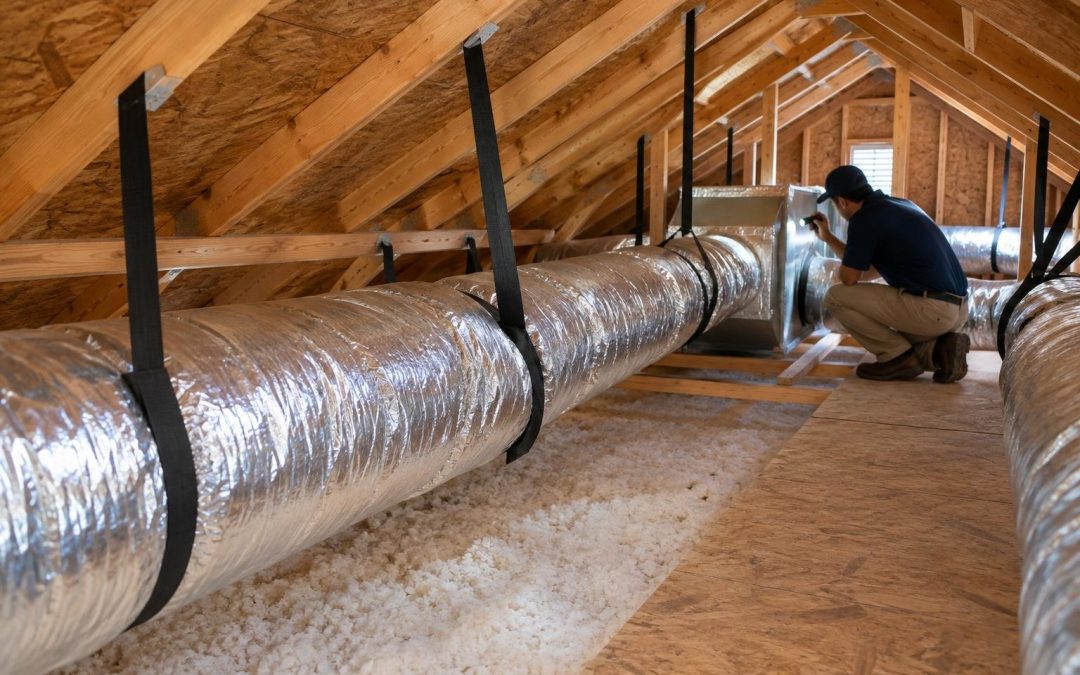
- Visible duct sections look damaged. In accessible spaces, look for flex duct that is crushed, torn, sharply bent, disconnected, or sagging. Gaps at connections or damaged insulation are also worth pointing out.
- Cooling costs or run times have changed without an obvious explanation. Duct leaks or restrictions may contribute, but equipment condition, filter maintenance, weather, and home changes can also affect system operation.
Why a duct problem can feel like an AC problem
Your air conditioner cools the air, while the duct system carries that air to different rooms and returns air to the equipment. If a duct is disconnected, leaking, restricted, or poorly supported, a room may receive less conditioned air than intended. A leak in a return duct can also draw air from an unconditioned area into the system. The actual effect depends on where the damage is and how the system is laid out.
That overlap is why an AC repair visit should not stop at the equipment if the reported issue is uneven cooling or weak airflow. A technician can check the filter and accessible vents, assess the air conditioner’s operation, and inspect accessible duct sections. Depending on the symptoms, the evaluation may also include airflow measurements or a duct leakage test. These checks help distinguish an equipment fault from a distribution problem instead of guessing based on one warm room.
Before booking, make a short list of affected rooms and any differences you have noticed. Tell the technician whether the problem is constant or intermittent and whether you can see any duct damage. Clear access to the indoor equipment, returns, and accessible duct areas can make the visit more productive. Avoid opening sealed sections or attempting repairs in spaces you cannot safely reach.
When duct repair may be enough
Repair can be appropriate when the issue is limited and the remaining ductwork is in serviceable condition. For example, a technician may recommend reconnecting a separated section, replacing a short damaged run, correcting a kink or compression in flexible duct, or sealing an accessible joint. The right repair depends on the duct material, location, condition, and the system’s airflow needs.
Insulation and air sealing serve different purposes. Insulation helps limit heat transfer; sealing addresses air leakage at joints and openings. If insulation is torn or damp, or if a section is leaking, covering it without addressing the cause may not resolve the problem. A qualified technician can explain whether a targeted repair, improved support, insulation work, or another correction is appropriate.
After repair, ask what was changed and how the technician checked the result. Depending on the work, that may include confirming that connections are secure, checking airflow at the affected rooms, or testing duct leakage. A clear explanation makes it easier to understand whether the repair addressed the original complaint and whether follow-up work is needed.
When replacement deserves consideration
Replacing a section—or, in some cases, a larger portion of the duct system—may be worth discussing when damage is widespread, materials have deteriorated, repeated repairs have not resolved the issue, or the layout is contributing to persistent airflow problems. Replacement can also be considered when duct sizing or routing is unsuitable for the home, but that conclusion should come from an assessment rather than from the age of the system alone.
A useful recommendation should identify which sections need attention and why. Ask whether the problem is localized or widespread, whether repair is a reasonable option, and how the proposed work will affect airflow to the rooms that are currently uncomfortable. If a larger replacement is recommended, ask how the design accounts for the home’s layout and existing cooling equipment. The goal is a suitable, well-connected duct system—not simply new material.
If you are also planning air conditioning replacement or a new AC installation in Bradenton, discuss the ductwork as part of the planning conversation. The equipment and ducts work together, so it is sensible to check whether the existing air-distribution system is appropriate for the proposed equipment. Duct changes should be based on the home’s needs, not assumed necessary with every equipment change.
Florida humidity, moisture, and air duct cleaning
In a humid climate, moisture concerns deserve careful investigation. If you see wet or damaged insulation, staining, or suspect growth inside an accessible duct, report the location and let a professional determine the source. Cleaning alone may not address an ongoing moisture problem. Insulated duct material that is wet or moldy may need to be removed and replaced, rather than simply cleaned; the appropriate response depends on inspection findings.
Air duct cleaning is a separate service from duct repair or replacement. It is not a routine cure for uneven cooling, and visible dust in a home does not by itself establish that the ducts need cleaning. Cleaning may be appropriate in specific situations, such as substantial visible mold growth inside hard-surface ducts, pest infestation, or excessive debris that is restricting airflow or being released into the home. Ask what evidence supports the recommendation and whether the underlying cause will also be addressed.
What to expect from an inspection
A useful visit starts with your observations and a check of the cooling equipment and basic airflow factors. The technician can then examine accessible supply and return ducts, connections, insulation, and signs of physical damage. If the initial findings do not explain the symptoms, ask what additional measurements or testing could help. Not every home needs the same tests, and not every airflow concern calls for duct replacement.
When comparing recommendations, look for a clear description of the problem, the proposed repair or replacement scope, and how the result will be checked. Ask whether the work involves one room’s branch duct or a broader section, and whether access limitations affect what can be inspected. A good explanation should distinguish confirmed findings from possibilities and give you a chance to consider the options.
Whether you need AC repair in Sarasota or help with ductwork in Lakewood Ranch, Venice, North Port, Longboat Key, or Parrish, a careful evaluation can help identify the right part of the system to address. An experienced HVAC company serving Sarasota County can assess the equipment and accessible ductwork together, then explain whether repair, replacement, maintenance, or another step fits the findings.
Concerned about uneven cooling or visible duct damage? Contact AC Heroes to discuss your home’s needs, or call (941) 724-7127 to request service.
Frequently Asked Questions
Can uneven cooling mean I need ductwork repair?
Not necessarily. A warm room can result from a blocked vent, filter, equipment issue, or duct problem, so an inspection can help identify the cause before repairs are chosen.
How do I know whether ducts need repair or replacement?
Repair may suit a localized issue such as a disconnected or damaged section. Replacement may be considered when deterioration is widespread or the duct layout is contributing to recurring airflow problems.
Does air duct cleaning fix weak airflow?
No. Air duct cleaning is generally considered when there is a specific condition, such as substantial visible mold inside hard-surface ducts or excessive debris. Cleaning does not correct leaks, damaged ducts, or an unresolved moisture source.
What happens during a ductwork inspection?
A technician may inspect accessible ducts, connections, insulation, vents, and the cooling equipment. Depending on the symptoms, airflow measurements or duct leakage testing may help clarify what is happening.
Should ductwork be checked during air conditioning replacement?
It is worth discussing the ducts alongside the equipment plans. The existing duct system should be assessed to determine whether it suits the home and the proposed equipment.
Sources
- Should You Have the Air Ducts in Your Home Cleaned? | US EPA
- Duct Sealing
- Should I have the air ducts in my home cleaned? | US EPA
- How to Prevent Duct…
- Heat & Cool Efficiently
- Duct Sealing with ENERGY STAR
- Should You Have the Air Ducts in Your Home Cleaned? – Printable Version
- Air duct cleaning recommendation: Don't bother.