
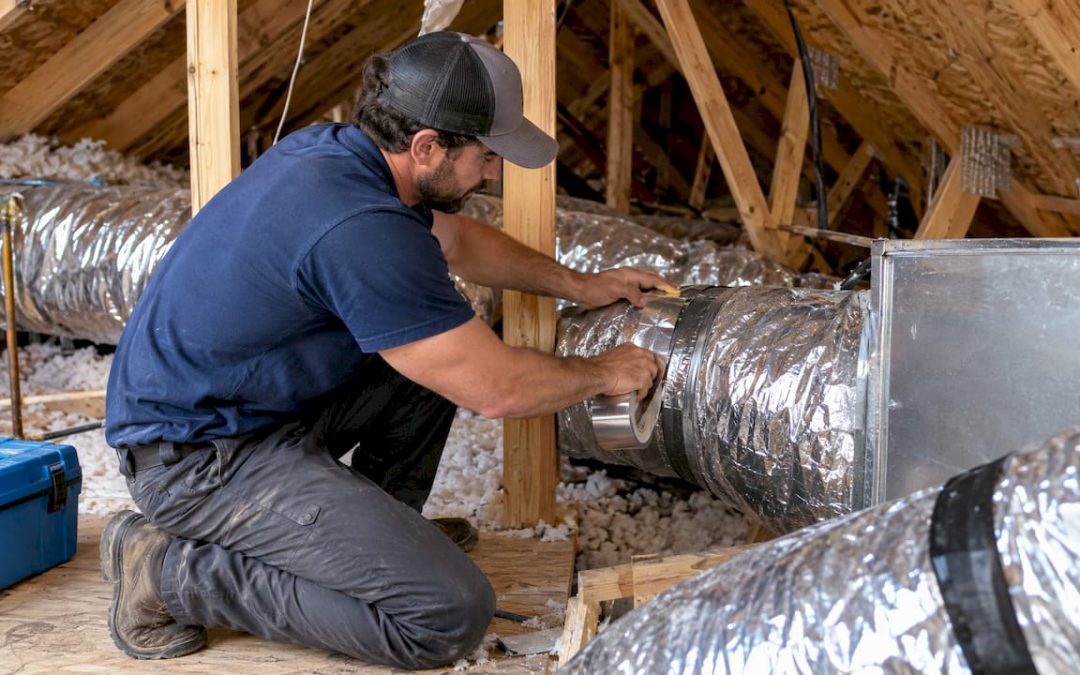
If your Sarasota County home has hot rooms, high summer bills or musty air coming from the vents, the ducts are often the problem, not the air conditioner. In a typical U.S. house, about 20 to 30 percent of the air moving through the duct system is lost to leaks, holes and poorly connected ducts. In Florida’s humidity, that means paying to cool air that never reaches your living room. The fix starts with a diagnosis that measures the leakage, not a sales pitch for a new system. That is how we approach ductwork repair and replacement for homes across Sarasota and Manatee Counties.
Key Takeaways
- Duct leaks waste roughly a quarter of the air your system produces, which shows up as high bills, uneven rooms and a system that runs constantly.
- Leakage can be measured. A technician can pressurize the ducts and read the leakage in cubic feet per minute, so the repair is based on numbers.
- Most duct problems are repairs (sealing, re-securing, replacing damaged runs), not a full replacement. Get the estimate in writing and the findings explained.
- Sealing ducts without testing the whole system can make things worse, and it can affect gas appliances. This is work for a licensed contractor.
- Verify the contractor’s Florida license before work starts. We back our work with a one-year labor warranty.
Table of Contents
- Signs Your Ductwork Needs Repair
- How a Duct Problem Gets Diagnosed
- Repair or Replace: What the Work Looks Like
- What Ductwork Repair Costs
- Why Duct Repair Is Not a Weekend Project
- How to Hire a Duct Repair Contractor in Sarasota County
- Our Perspective
- Get Your Ducts Checked by AC Heroes
- FAQ
- Sources
Signs Your Ductwork Needs Repair
Ducts hide in attics, wall cavities and crawlspaces, so you rarely see the damage. You see its effects. ENERGY STAR lists these signs of poorly performing ducts:
- High summer and winter utility bills
- Rooms that are difficult to heat or cool
- Stuffy rooms that never feel comfortable
- Ducts running through an attic, crawlspace or garage
- Flexible ducts that are tangled or kinked
Its guide to identifying home problems adds dust or smells coming from the attic or crawlspace, and tells homeowners to look for cracks, kinks, loose air supply boots (the fitting where a duct meets the register) and missing insulation.
In Sarasota County, a few local patterns make these signs worth taking seriously:
- Attic ducts in summer heat. Most homes here run ducts through a hot attic. A split in the duct dumps cooled air into that space and pulls hot, humid attic air back into the system.
- Moisture and mold. Humid air meeting a cold, leaky duct surface can lead to condensation. If you see growth near vents, our guides on mold around air vents and mold in your HVAC system explain what it means.
- Whistling, rattling or thumping. The Department of Energy’s duct retrofit guide says noise and vibration can point to interior deterioration, incorrect sizing or inadequate securing, often because the ducts are undersized.
Supply leaks and return leaks
You can often feel a supply-side leak. Air blows out of the connection, or nearby insulation moves. Return leaks are harder to spot, because return ducts run at lower pressure and pull air in. That air can be hot attic air, dust or insulation fibers. According to a duct testing brief from a California utility, a leaky return can draw in stale or polluted air from an attic or crawlspace, and a leaky supply side can pull outside air into the home and lower indoor air quality.
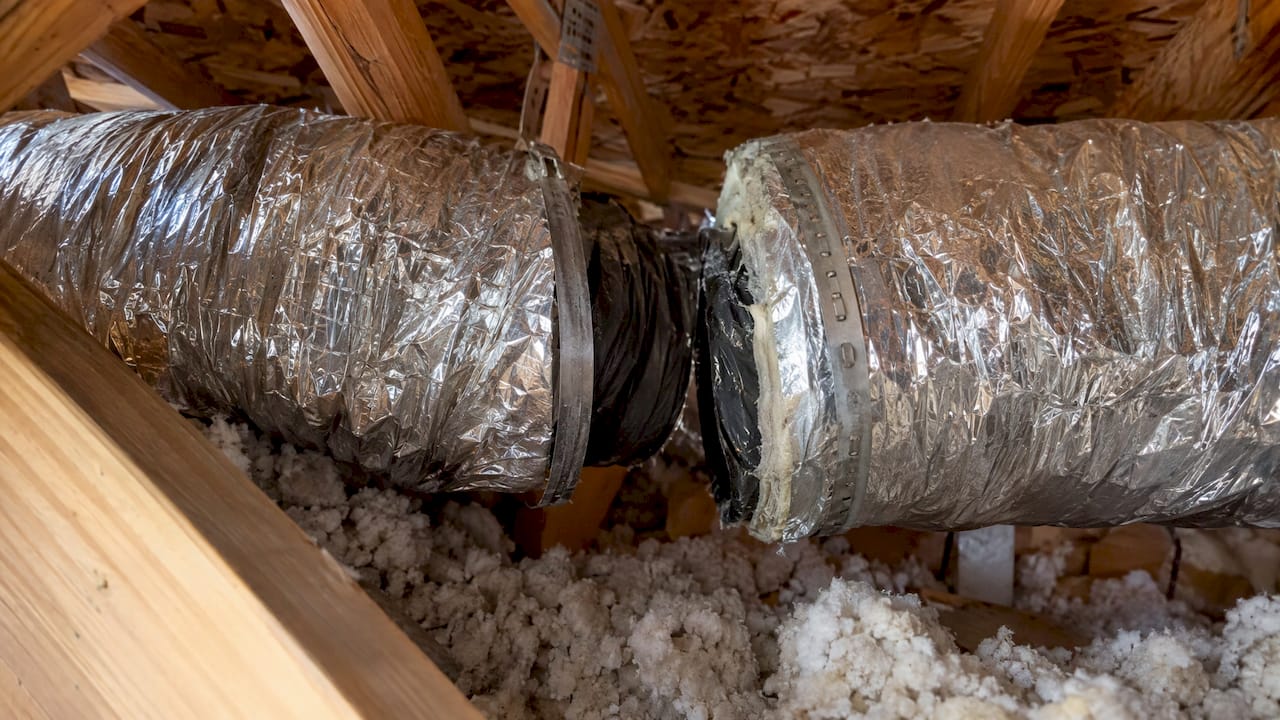
The same Florida energy source recommends inspecting ductwork once a year for leaks. That fits neatly into a yearly tune-up, which is one reason our preventative maintenance programs are a practical place to catch duct problems early.
How a Duct Problem Gets Diagnosed
A visual check finds the obvious damage: a crushed run, a disconnected section, a torn boot. It does not tell you how much air the whole system loses. That takes a test.
Per the Building America Solution Center, air leaks through loose connections between duct sections, at duct boots, along trunk lines and at the air handler. Technicians can measure it two main ways:
- Duct blower test. A calibrated fan pressurizes the ducts to 25 Pascals, and the technician reads the leakage in CFM (cubic feet per minute). A utility testing brief says the test takes about an hour and the HVAC system must be off while it runs.
- Blower door and pressure pan. The house is depressurized, and a pressure pan over each register shows which runs leak. A reading above 2 Pascals points to nearby duct leakage, while a reading under 1 Pascal is considered good.
An infrared camera used alongside a blower door can also show air leakage and heat loss at duct and flue shaft openings when there is enough temperature difference.
A good diagnosis also looks at airflow, not just leaks. Duct compression matters more than most homeowners expect: the Department of Energy notes that a 15% compression can raise pressure loss by 400 to 800 percent, which strangles airflow. A crushed flex duct behind a kneewall can cause a bedroom problem that no thermostat setting will solve.
This is the reason we put diagnostics before any sales pitch. When we look at your system, you should leave with a clear explanation of what is wrong, where it is and what it will take to fix, in a written estimate.
Repair or Replace: What the Work Looks Like
Most duct problems are fixable without tearing out the whole system. The usual repair work includes:
- Sealing joints and seams. Mastic (a thick paste) or acrylic-adhesive foil tape seals duct leaks. Mastic alone suits cracks under 1/4 inch wide, and foil tape properly applied carries a 20-year guarantee. Standard cloth duct tape is not the right material.
- Reinforcing larger gaps. The Bonneville Power Administration’s duct sealing manual requires mesh-reinforcing tape before mastic on gaps over 1/4 inch, and at least three sheet metal screws at each metal duct connection.
- Re-supporting sagging runs. The DOE’s duct fact sheet calls for hanger straps at least 1.5 inches wide, spaced no more than 4 feet apart, with sag limited to 1/2 inch per foot. Flexible duct bends need a radius of at least one duct diameter.
- Replacing damaged sections. Crushed, torn, water-damaged or undersized runs are replaced rather than patched.
- Sealing boots and plenums. Boots that do not seal tightly to the grille or drywall are a common leak point, and they are fixed at the source.
Replacement of the whole duct system makes sense when the ducts are widely deteriorated, were undersized from the start, or when a new system is going in and the old ducts cannot support it. In that case the ducts and the air conditioner should be designed together. If you are replacing the air conditioner, our installation work is sized for Florida humidity, and duct condition is part of that conversation.
Testing after the repair
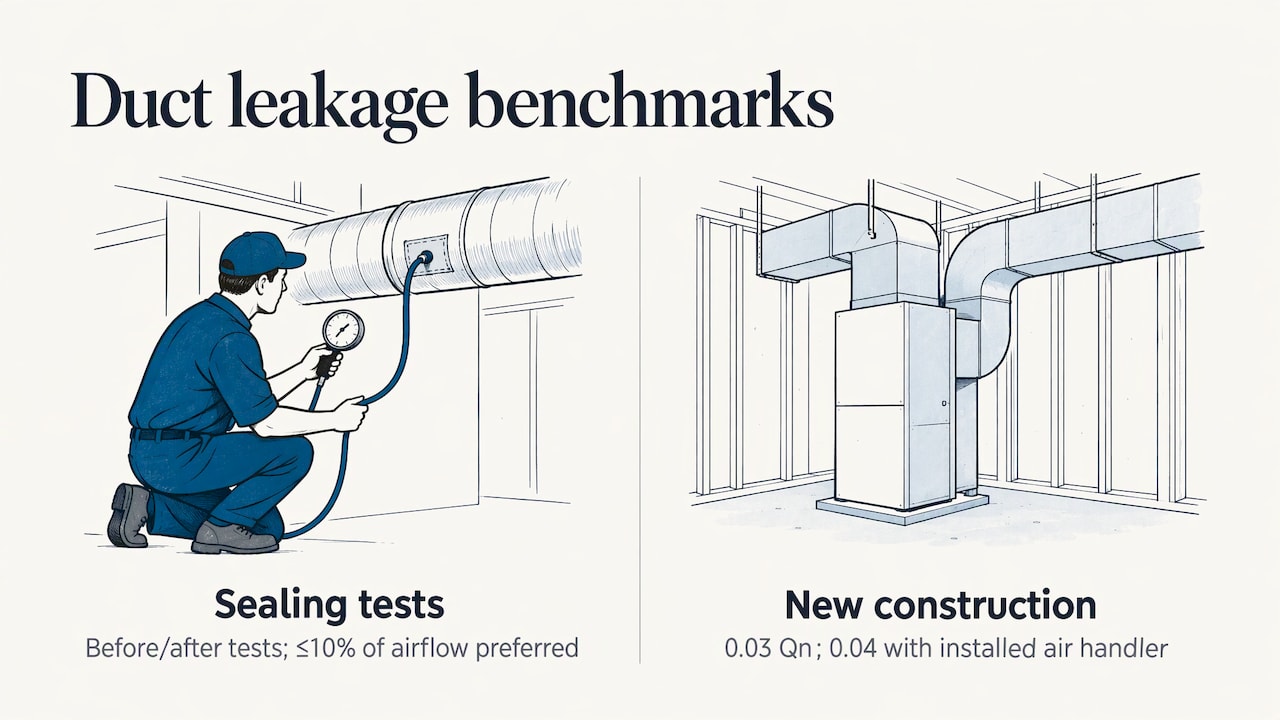
A repair is only proven when it is measured. The DOE fact sheet requires leakage testing before sealing, and post-sealing testing to verify the target was met, with total duct leakage preferably at 10% of airflow or less. For new construction, the Florida energy code form for duct leakage sets a total leakage limit of 0.03 Qn, or 0.04 if the air handler is installed. Qn is leakage in CFM per 100 square feet of conditioned floor area. It is a useful benchmark for what a tight duct system looks like.
What Ductwork Repair Costs
We do not publish flat prices for duct work, because the scope varies too much from house to house. The honest answer is that a repair estimate depends on what the diagnosis finds.
For replacement, the Department of Energy’s duct retrofit guide cites national averages from $1,450 to $8,000, with complex projects above $12,000. Those are national figures for replacement, not Sarasota County quotes, and a repair of a few sections typically sits well below a full replacement. The same guide lists what moves the price:
| Cost factor | Why it matters |
|---|---|
| Removal of the existing system | Tearing out old ducts adds labor and disposal |
| New vents and registers | More openings mean more material and time |
| Sealing the system | Testing and sealing add a step but cut leakage |
| Added insulation | Common for attic runs in Florida heat |
| Material used | Rigid metal, flex duct and fiberglass board differ in cost |
| Duct location | Tight attics and finished walls are harder to reach |
| Size of the system | Larger homes need more duct |
The return on a repair is also in the energy bill. The same DOE guide says duct leaks cost the average home 20 to 30 percent of its heating and cooling energy. In a county where the air conditioner runs most of the year, that adds up fast.
When you get an estimate, make sure it states what was found, which sections are being repaired or replaced, which materials will be used and what warranty covers the work. Ours comes in writing, with the findings explained, and our labor is covered by a one-year warranty.
Why Duct Repair Is Not a Weekend Project
ENERGY STAR notes that some homeowners seal accessible ducts themselves with mastic or metal tape, and also that many choose a professional contractor. For most Sarasota County homes, where the ducts are in a hot attic, there are good reasons to choose the professional route:
- Fixing one side can unbalance the other. According to the Florida energy guide, repairing only supply leaks can draw even more unconditioned air in through return-side leaks. A technician who tests the whole system sees that before it happens.
- Combustion safety. ENERGY STAR warns that sealing a home or ductwork can cause combustion appliances such as water heaters to backdraft, and recommends testing by a home energy professional first. If you have a gas water heater or furnace, ask your contractor to check this.
- Hidden materials in older homes. The DOE guide tells technicians to ask about asbestos before any duct work and to check insulation, duct and tape for asbestos-containing material. If your home is older and the ducts are wrapped or taped in old material, do not disturb it. Have a licensed contractor assess it.
- No measurement. Without a blower or pressure test, you cannot tell whether a patch worked.
How to Hire a Duct Repair Contractor in Sarasota County
Duct work in Florida should be done by a licensed contractor. Before you sign anything:
- Check the license. Search the contractor’s name, company or license number on the state’s licensing site and confirm the status reads Current, Active. Certified contractors can work statewide, while registered contractors are limited to the county or municipality where they are registered.
- Understand the license scope. A Florida Class B Air Conditioning Contractor’s scope includes ductwork needed to complete an air-distribution system.
- Ask what will be measured. Look for a diagnosis that includes leakage and airflow, not just a look in the attic.
- Get the estimate in writing. It should list the findings, the scope and the warranty.
- Ask about the warranty. Our labor warranty is one year on all work.
- Veterans and military. We are veteran-owned, and we offer military and veteran discounts.
Our Perspective
Most homeowners call us about a hot bedroom or a high bill and expect to hear that they need a new air conditioner. Often the equipment is fine and the ducts are the issue. We built our approach around that: diagnose first, explain what we find, and give you a written estimate you can read at the kitchen table.
Florida’s humidity is hard on a duct system. Leaks in a hot attic waste cooling, and moisture where cold ducts meet warm air can cause problems of its own. That is why we look at the whole system, ducts, airflow and equipment together, instead of treating one symptom. It is also why we stand behind our work with a one-year labor warranty.
If your ducts are due for repair or replacement, you get a specific answer about what needs to be done and why. That is what we think you should expect from any contractor in Sarasota and Manatee Counties.
Zach
Get Your Ducts Checked by AC Heroes
We repair and replace ductwork for homeowners in Sarasota and Manatee Counties, including Lakewood Ranch, Venice and Longboat Key. Every job begins with a thorough diagnosis and a transparent written estimate. Our technicians are available for same-day service and 24/7 urgent calls, and military and veteran discounts apply. Learn about our ductwork services or, if your system has stopped cooling altogether, see our AC repair service.

If your ducts are clean but leaking, or leaking and dirty, you can pair repair with air duct cleaning so the whole system is addressed in one visit schedule.
FAQ
How much does it cost to replace ductwork in a house?
The Department of Energy’s duct retrofit guide cites national averages for duct replacement of $1,450 to $8,000, with complex projects above $12,000. Cost depends on removal of the old system, new vents and registers, sealing, insulation, material, duct location and system size. A written estimate after a diagnosis gives you the real number for your home.
Can I repair ductwork myself?
ENERGY STAR says some homeowners seal accessible ducts with mastic or metal tape, never duct tape, but that many hire a professional. In Florida attics, repairing only part of the system can unbalance airflow, and sealing can cause combustion appliances to backdraft. A licensed contractor tests the system as a whole and handles these risks.
How do I know if my ducts are leaking?
High bills, rooms that never cool, stuffy air, dust or odors from the attic, and noise from the ducts are the main signs. Supply leaks may be felt at connections, while return leaks are harder to find. A duct blower or pressure pan test shows the actual leakage.
Do I need a licensed contractor for duct repair in Florida?
Yes, hire one. Verify the license on the state licensing site and confirm it reads Current, Active. Certified contractors work statewide, while registered contractors are limited to the county or municipality where they are registered.
Is duct cleaning the same as duct repair?
No. Cleaning removes dust and debris from the ducts, while repair fixes leaks, damage and failed connections. Many homes benefit from both, and our air duct cleaning page explains that service.
Sources
- Duct Sealing | ENERGY STAR
- Identify the Problems You Want to Fix | ENERGY STAR
- Duct Leakage Tests | Building America Solution Center
- Sealing Duct Boots to Floor or Drywall | Building America Solution Center
- DOE CEE Duct Retrofit Decision Guide (2024)
- DOE Home Improvement Expert Fact Sheet and Checklist: Duct Sealing
- Duct Systems | My Florida Home Energy
- PTCS Duct Sealing trainee manual | Bonneville Power Administration
- Finding Duct Leaks by Touch and Sight | Energy Out West
- Duct Testing Tech Brief | PG&E
- Duct Leakage Test Report, 2023 Florida Building Code Energy Conservation
- Licensed HVAC Contractor in Florida: How to Verify | CheckLicensed
- Florida Class B Air Conditioning Contractor license | Cam Tech School