
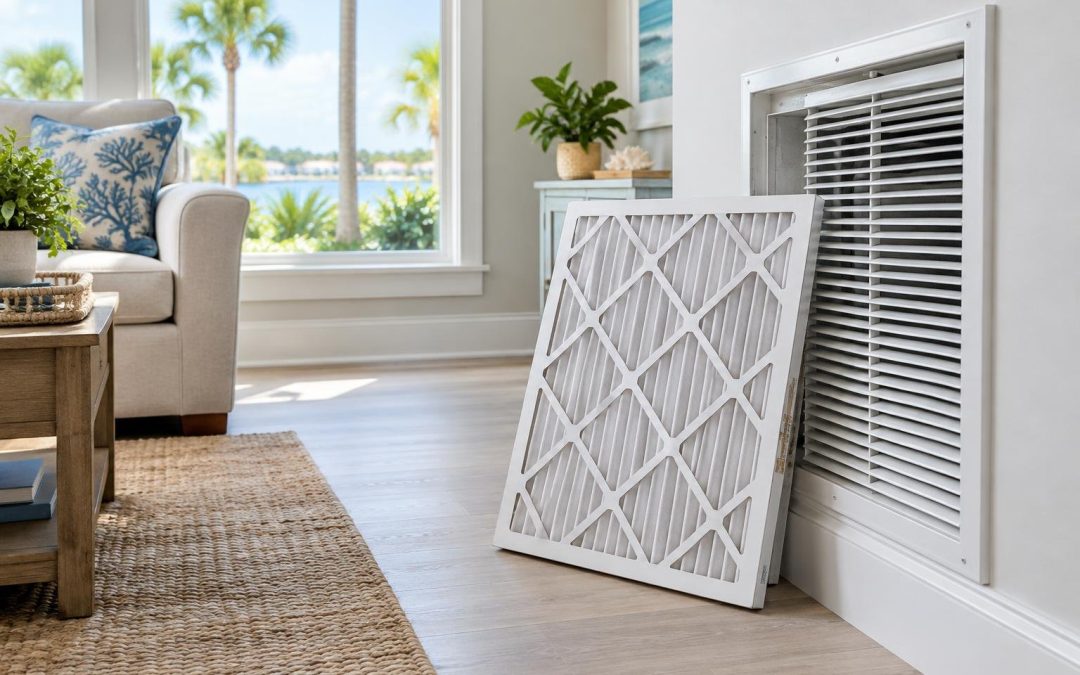
In a Florida home, the air conditioner may run through much of the year, so its air filter can collect dust and debris faster than you expect. Choosing the right filter—and checking it regularly—can help your system move air as intended and capture airborne particles. The best choice is not necessarily the filter with the biggest number on its label: it must also fit your equipment and suit the filter slot.
This guide explains how to read filter ratings, find the right size, and decide when to replace one. If a filter change does not improve weak airflow or comfort, the issue may need attention from an HVAC professional.
What your AC filter does—and what it does not do
A central air filter catches some airborne particles as air passes through the HVAC system. Depending on its rating and design, it can capture particles such as dust, lint, and pollen. A filter also helps keep some debris from collecting on system components.
However, a standard AC filter is not a complete indoor air quality solution. It is primarily designed to filter particles, not to remove every odor or gaseous pollutant. It also cannot correct a mechanical problem, moisture issue, or source of dust in the home. If concerns persist after routine maintenance, a professional can help determine whether the system or another indoor air quality measure needs attention.
Understand MERV ratings before you upgrade
MERV stands for Minimum Efficiency Reporting Value. It rates how well a filter captures particles within a specified size range; in general, a higher MERV rating means the filter captures a greater share of certain particles. That does not automatically make the highest-rated filter the best match for every home.
The U.S. Environmental Protection Agency advises choosing a MERV 13 filter, or the highest rating the system fan and filter slot can accommodate. Compatibility matters. A filter that is not suited to the equipment may make airflow more difficult, so check the system documentation or ask an HVAC professional before changing to a higher rating.
Filter design and thickness also matter. A filter made for a deep media cabinet is not interchangeable with a thin filter made for a one-inch slot, even if the ratings look similar. Follow the rating and size specified for your system rather than choosing by packaging alone.
Find the correct size and make sure it fits
Start by checking the dimensions printed on the existing filter and compare them with the replacement label. If the old filter is missing, look in the equipment manual or on the filter cabinet for the required size. Do not assume a filter will fit because its listed dimensions are close.
A properly fitted filter should sit securely in its slot without gaps around the edges. Air can bypass a filter that is too small, while forcing an oversized filter into place can bend or damage it. Never crush, fold, or trim a filter to make it fit. If the printed size is hard to read or the filter does not sit correctly, confirm the required dimensions before buying another.
When installing a replacement, check for an airflow arrow on the frame and follow the equipment or filter instructions. The arrow typically points in the direction air travels through the system. If you are unsure which way it should face, check the manual or ask a technician rather than guessing.
How often should you check or replace it?
Use the filter maker’s schedule as your starting point, but do not rely on a calendar alone. ENERGY STAR recommends inspecting a central system filter monthly. The EPA notes that manufacturers commonly recommend replacing filters every 60 to 90 days, with a more frequent change appropriate when a filter becomes visibly dirty sooner.
In a Sarasota County home, the right interval can vary with system use and household conditions. Pets that shed, home projects that create dust, and long periods of air-conditioning use can mean a filter needs attention sooner. A quick monthly look makes it easier to spot buildup before the scheduled replacement date.
- Turn the system off if your equipment instructions call for it before changing the filter.
- Remove the filter carefully and check it for visible dust buildup or damage.
- Compare the replacement’s size and rating with the system requirements.
- Install it in the indicated airflow direction and ensure it sits securely.
- Write the change date on the frame or set a reminder to inspect it again.
If your system has a reusable filter, follow the manufacturer’s cleaning and drying directions. Do not put a damp filter back in place. For either type, never operate the system without the filter that the equipment requires.
Signs a filter may be part of an airflow problem
A heavily loaded filter may make it harder for air to pass through. If airflow seems weaker, start with a visual filter check and replace it if it is due or noticeably dirty. A clean, correctly sized filter is a sensible first step, but it is not a diagnosis.
If the filter is clean and airflow remains poor, or if the system does not cool as expected, there may be another cause. A blocked return, equipment issue, thermostat setting, or other system condition could be involved. Avoid trying to compensate with an improvised filter or by removing the filter altogether. Arrange an assessment if the problem continues.
Frequent filter buildup is also worth noting. Keep track of how quickly it gets dirty and mention the pattern during maintenance. A technician can check whether the filter type, fit, system condition, or household circumstances call for a different approach.
Keep the filter part of a wider maintenance routine
Regular filter checks are a practical homeowner task, but they do not replace professional preventative maintenance. During a service visit, an HVAC technician can assess system operation and identify concerns that a filter inspection cannot reveal. If you are weighing AC repair Sarasota homeowners often need, or considering air conditioning replacement, filter history can be useful context for the technician.
For example, note the filter size and rating, how often you change it, and whether airflow or comfort has changed. These details can help guide a more useful conversation about the system. A correctly fitted filter and timely replacement are simple steps, but persistent cooling or airflow concerns call for a closer look.
AC Heroes serves Sarasota and Manatee County, including Bradenton, Lakewood Ranch, Venice, North Port, Longboat Key, and Parrish. Whether you need AC maintenance, AC repair Sarasota, or information about AC installation Bradenton homeowners can request, contact our team at ac-heroes.com/contact-us or call (941) 724-7127.
Frequently Asked Questions
How often should I check my AC filter in Florida?
ENERGY STAR recommends checking a central HVAC filter monthly. Replace it according to the manufacturer’s instructions, and check sooner if it looks heavily soiled.
Is a higher MERV rating always better?
The EPA advises using MERV 13, or the highest rating your system can accommodate. Check the equipment requirements or ask an HVAC professional before upgrading.
How do I know which filter size to buy?
Use the size printed on the existing filter or listed in the equipment documentation. It should sit securely without gaps and should not need to be bent or crushed.
Can a dirty filter cause weak airflow?
A dirty filter can make airflow more difficult, so checking it is a useful first step. If airflow remains weak after replacing a dirty filter with the correct one, have the system assessed.
Does an AC filter remove odors from my home?
A standard HVAC filter primarily captures particles as air passes through it; it is not designed to remove every odor or gaseous pollutant. Persistent indoor air quality concerns may need a broader assessment.