
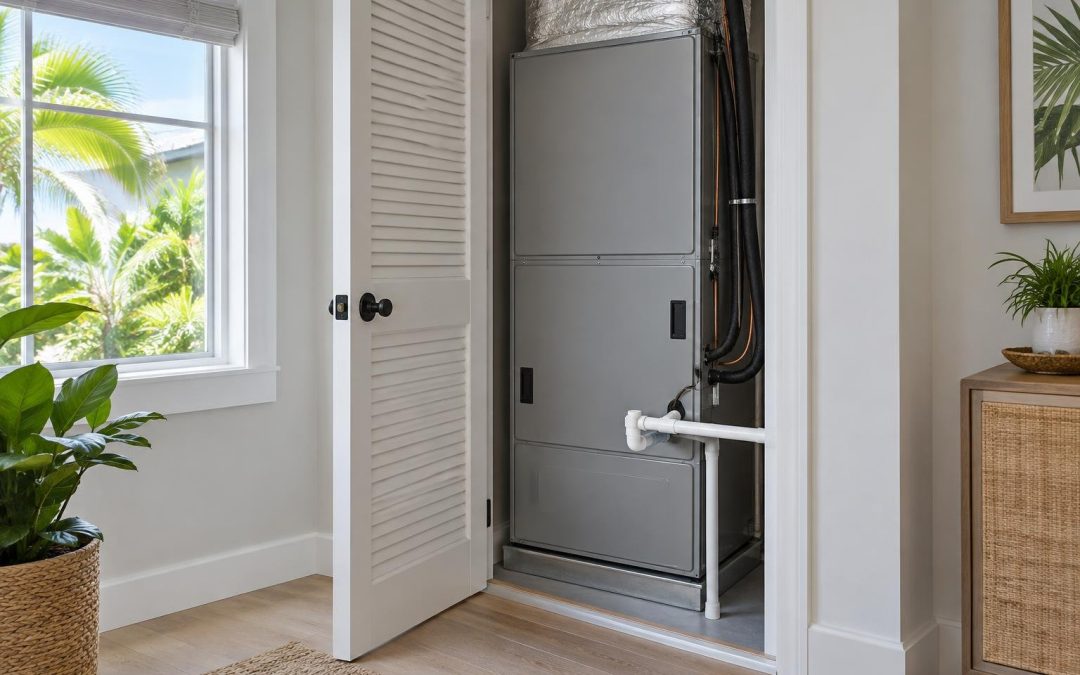
In a humid Florida home, your air conditioner does more than cool the rooms: as warm air passes over the indoor coil, moisture collects and drains away through a condensate line. If that water cannot flow freely, it may back up near the indoor unit, affect indoor humidity, or interrupt cooling. Knowing what to look for can help you respond early and decide when it is time to call an HVAC professional.
Here is a practical guide for homeowners in Sarasota County and nearby communities: how the drain works, which warning signs to notice, what simple checks are safe, and when to arrange AC repair in Sarasota.
What the AC condensate drain does
During cooling, the indoor coil gets cold as it removes heat from the air. Moisture from the air forms on the coil, drips into a drain pan, and is carried away through a pipe. In Florida’s humid climate, the system can collect a substantial amount of water while it runs.
A clear drain helps that water leave the home as intended. Dust, algae-like buildup, or other debris can restrict the line over time. A drain pan or pipe can also develop a problem that needs professional attention. The exact setup varies by system, so consult the equipment manual and leave repairs to a trained technician.
Signs the drain may need attention
A clogged drain is not the only possible cause of these symptoms, but they are good reasons to investigate promptly:
- Water around the indoor unit: Dampness, a puddle, or a water mark near the air handler can point to a drain or pan issue. Keep people and belongings clear of the wet area, and do not assume the water will stop on its own.
- The AC stops cooling unexpectedly: Some systems have a safety switch that can stop operation when water rises in the drain pan. Other systems may behave differently, so a shutdown calls for a proper inspection rather than a guess.
- Indoor air feels more humid than usual: A drainage problem can affect moisture management, but other causes are possible too, including restricted airflow or an equipment issue. Note when the change began and whether it occurs throughout the home.
- Visible water in or around the drain pan: If the pan is accessible without removing equipment panels, standing water is a reason to contact a technician. Do not reach into the unit or dismantle components to inspect it.
If you see active leaking, turn off the system if you can do so safely using its normal controls, then contact an HVAC company. Avoid stepping through standing water or touching wiring and internal components.
Safe homeowner checks
A few basic habits can support dependable airflow and help you spot concerns early. These checks do not replace a maintenance visit, and your system’s manufacturer instructions should always take priority.
- Check the air filter regularly. ENERGY STAR advises checking central-system filters monthly. Replace or clean the filter according to its type and the manufacturer’s directions; a dirty filter can restrict airflow.
- Look for obvious water or dampness. From a safe distance, inspect the area around the indoor unit and any visible drain outlet. If you notice a leak, recurring water, or an unusual change in operation, arrange service.
- Keep the area around equipment accessible. Avoid storing items against the air handler or blocking access needed for an inspection. Do not pour cleaners into the drain or insert tools into a pipe unless the equipment maker specifically instructs you to do so.
- Make a note of the symptoms. Record when the issue occurs, whether the system still cools, and where you see water. These details can help a technician assess the problem.
Skip improvised fixes that involve opening the cabinet, handling electrical parts, or applying unapproved chemicals. A technician can inspect the drain, pan, coil, and related components and determine whether cleaning, repair, or another service is appropriate.
Why routine maintenance matters
A seasonal maintenance visit gives a technician an opportunity to inspect the condensate drain and pan along with other parts of the cooling system. ENERGY STAR includes checking and inspecting the condensate drain in its maintenance checklist, noting that a plugged drain can cause water damage and affect indoor humidity. A technician can also assess the filter, coils, airflow, controls, and overall system operation.
Regular care is useful even when the AC seems to be working normally. A system may continue to run while a drain restriction or another developing issue goes unnoticed. In a climate with a long cooling season, scheduling preventative maintenance before periods of heavy use can help identify concerns before they become an unexpected interruption.
Maintenance is not a guarantee that a breakdown will never happen. It is a chance to check key components, discuss changes you have noticed, and get recommendations that suit your equipment and home.
When to call for AC repair
Contact a professional if water keeps returning, the unit shuts down, cooling becomes unreliable, or you cannot identify the source of a leak. Prompt attention matters because water escaping from the drain system can damage nearby surfaces and belongings. If the system has stopped, avoid repeatedly restarting it before the cause is checked.
For homeowners searching for AC repair in Sarasota, service in Lakewood Ranch, or AC service in North Port, explain the symptoms when you call. Share whether the indoor unit is wet, whether the system is running, and how long the issue has been happening. If a technician finds that the problem is not the drain, those details can still help narrow down the next inspection steps.
Drain problems or a larger system issue?
Water near the air handler can have more than one cause, and not every cooling problem is a drain blockage. Reduced airflow, a dirty coil, an installation concern, or another equipment fault may require a different solution. A qualified technician can assess the complete system rather than treating one symptom in isolation.
If a system is aging or needs repeated repairs, ask for a clear explanation of its condition and available options. Depending on the findings, the right next step may be a repair, continued maintenance, or an evaluation for air conditioning replacement. For a new home or system change, AC installation in Bradenton should include attention to sizing, airflow, and the home’s ductwork—not just the equipment itself.
AC Heroes provides AC repair, preventative maintenance, installation and replacement, ductwork services, and air duct cleaning for homeowners across Sarasota County and nearby areas. Whether you need help in Venice, Longboat Key, or Parrish, describe what you are seeing so the team can guide you toward the appropriate service.
Get help with a drain or cooling concern
If you notice water near your indoor unit or your AC is no longer cooling reliably, contact AC Heroes to discuss an inspection. Visit the contact page or call (941) 724-7127 to schedule service.
Frequently Asked Questions
Why is water collecting near my indoor AC unit?
Water may indicate a restricted drain, a drain-pan issue, or another system problem. Turn off the AC using its normal controls if you can do so safely, keep clear of the wet area, and arrange an inspection.
Can a clogged drain make my air conditioner stop running?
Some systems use a safety switch that can stop cooling when water backs up, but not every system responds the same way. A technician can inspect the drain and check for other causes of the shutdown.
What AC drain checks can I do myself?
Check the filter monthly and follow the equipment maker’s instructions for replacement or cleaning. If you see standing water, a leak, or repeated cooling interruptions, contact an HVAC professional rather than opening the unit or using unapproved cleaners.
When should I call for AC repair?
Schedule service if water returns, cooling becomes unreliable, the unit shuts off, or you cannot identify the source of a leak. A technician can inspect the drain and related system components.
Does AC maintenance include checking the condensate drain?
A maintenance visit can include inspecting the condensate drain and pan, filter, coils, airflow, and system operation. Regular checks can help identify developing concerns, though they cannot guarantee that a breakdown will not occur.
Sources
- Maintenance Checklist
- AC Heroes: Air Conditioning Installation & Repair Sarasota, FL
- A Guide to Energy-Efficient Heating and Cooling
- You are here: EPA Home
- Moisture Control Guidance for Building Design …
- HVAC & AC Repair Sarasota – Plumber & Electrician
- Air Conditioning Service Guide | Expert AC Service
- Routine Maintenance Is…