
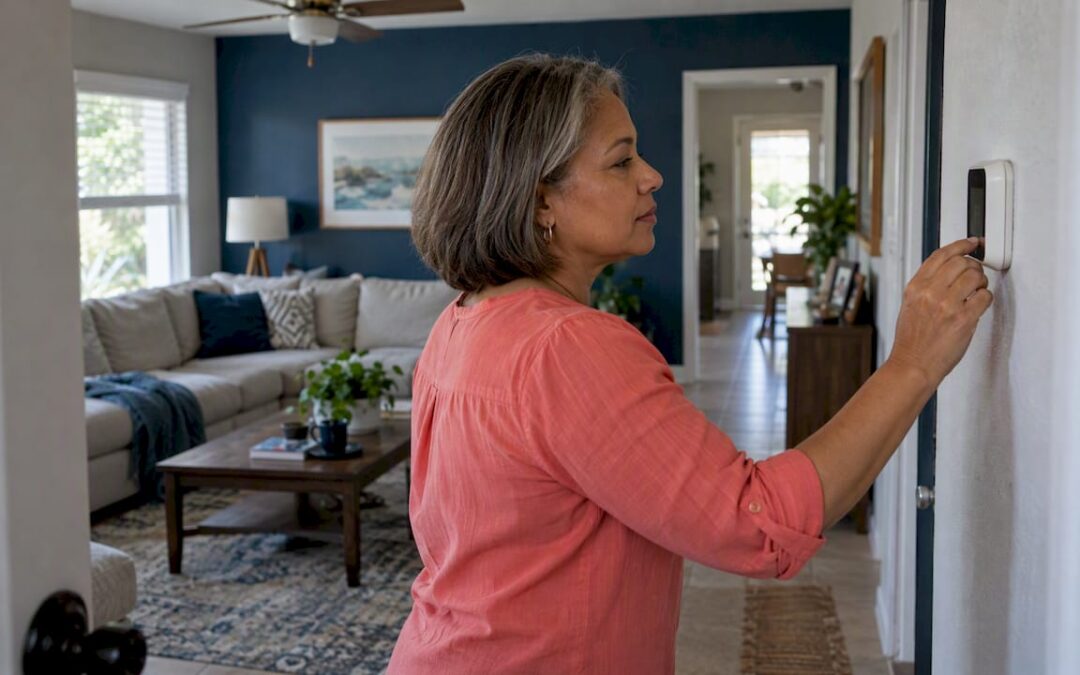
Most heaters that won’t start have a simple cause: the thermostat is set wrong, its batteries are dead, the breaker tripped, a panel isn’t seated, or the filter is choked. Work through those five checks in order and you will solve some cases in ten minutes. If they don’t work, or you smell gas or hear a carbon monoxide alarm, stop and get help. Here in Sarasota and Manatee Counties, most homes heat with a heat pump or electric air handler rather than a gas furnace, so this guide covers both.
Key takeaways
- Start with the thermostat: set it to Heat and raise the setpoint a few degrees above room temperature. Dead batteries are a common reason nothing happens.
- Check the power next: the switch at the furnace or air handler, the panel, and the breaker. Reset a breaker once, never repeatedly.
- A dirty filter or blocked vents can make a system shut itself down. Replacing a filter is a safe DIY job.
- If you smell gas, a CO alarm sounds, or a breaker trips again, leave the system off and call a professional.
- Capacitors, igniters, flame sensors and gas valves are not homeowner repairs.
Table of Contents
- Start with the thermostat
- Check power: the switch, the panel and the breaker
- Check the filter and the vents
- Heat pump or furnace: what is actually in your home?
- Gas furnaces: where DIY stops
- If you have a plug-in electric heater
- The heater runs but there is no heat
- When to stop troubleshooting and call
- What a proper diagnostic visit looks like
- Our perspective
- FAQ
- Sources
Start with the thermostat
It is the least dramatic cause and the most common one, so check it before anything else. The manufacturer of a popular smart thermostat line says to switch the thermostat to Heat, raise the setpoint a few degrees above the room temperature, and watch for the heating indicator or listen for a click. Gas and boiler systems can take a few minutes to begin, so give it a little time before deciding nothing is happening.
Work through this short list:
- Confirm the mode says Heat, not Cool, Off or Auto with a stale schedule.
- Set the temperature at least three to five degrees above what the house reads now.
- If the screen is blank, replace the batteries. The same manufacturer notes that on models without a touchscreen, low batteries can keep the system from turning on.
- Look for error messages or a hold or vacation setting that overrides your schedule.
In Florida this matters more than you would expect. Many of our homeowners set the thermostat to Cool in June and don’t touch it until the first cold front in December or January. By then the batteries may have died, or someone changed the mode months ago and forgot.
Check power: the switch, the panel and the breaker
If the thermostat is fine and the display is on but nothing starts, move to the equipment itself.
The service switch
Look near the furnace or air handler for a switch that looks like an ordinary light switch. The Sensi guidance lists verifying that the HVAC power switch is on as a first power check. In garages and closets these get bumped, or switched off by someone doing other work.
The access panel
Furnaces and air handlers have a safety switch behind the door or panel. If the panel isn’t seated fully, the system won’t run. One thermostat maker explains that door safety switches may prevent operation when access panels aren’t closed completely. Remove the panel, set it back and press until it seats. Many units also have an error light that flashes in a pattern. Check the sticker on the panel for what the pattern means, and write it down for your technician.
The breaker
Find the breaker for the furnace or air handler. Switch it fully off, then fully on. That is the reset for central HVAC, as the Sensi support page describes. Do it once. A furnace manufacturer’s guidance is that if the breaker trips again, you should leave it off and call a professional, and that you should never bypass safety components. A breaker that keeps tripping is telling you something is shorted, seized or overloaded. Resetting it again and again risks damaging the equipment.
Check the filter and the vents
It seems unrelated, but airflow can stop a heater from running. A manufacturer’s furnace guide explains that a clogged filter restricts airflow, can overheat the system, and can trigger an automatic shutdown. The same company’s troubleshooting checklist also recommends making sure supply and return vents are open and unobstructed.
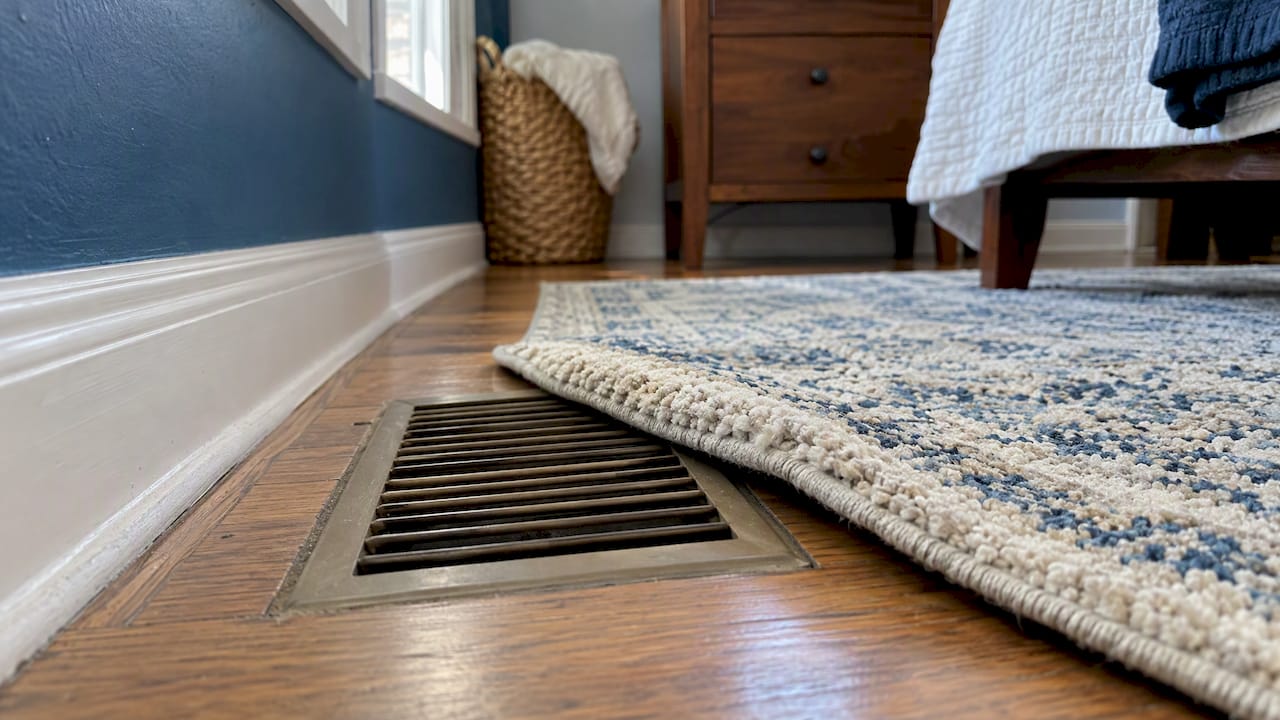
Pull the filter and hold it up to a light. If you can’t see light through it, replace it. In Sarasota the system runs most of the year for cooling, so filters load up with dust, pollen and pet hair far faster than in northern homes. Then walk the house and make sure furniture, rugs or closed registers aren’t blocking the vents.
If the filter looks grimy every time you check, the ducts may also be carrying more debris than they should. That is a good reason to ask about air duct cleaning at your next visit.
Heat pump or furnace: what is actually in your home?
Before you troubleshoot further, know what you have. Look at the outdoor unit. If it is the same box that cools your home in summer and there is no gas meter or gas line at the indoor unit, you very likely have a heat pump with an electric air handler. If there is a gas line and a vent pipe, you have a gas furnace.
Heat pumps
The first checks are the same: thermostat mode and power, then the filter, blocked return airflow and debris around the outdoor unit. One manufacturer’s heat pump guide lists exactly those checks: thermostat mode, power, the filter, return airflow, outdoor-unit debris and power supply. The same guide warns that if a heat pump breaker trips, resetting and restarting it may cause further damage, and you should call for service.
A heat pump that hums or clicks but won’t start may have a failed capacitor. Visible signs can include bulging, cracks or leaking fluid, according to a heat pump capacitor guide from a manufacturer. The same page says capacitors are high-voltage parts, and testing, discharging or replacing them should be done by a trained HVAC professional. Don’t open the unit and poke at it. Capacitors can hold a charge even when the power is off.
Gas furnaces
Gas furnaces add a few more possible causes. Manufacturer guides list ignition or pilot failure, gas-supply problems, a dirty flame sensor, a clogged condensate drain and blower-motor failure among the common reasons a furnace won’t start. Another lists a faulty igniter and gas-supply or valve issues as well. Most of these need a technician with the right tools.
Gas furnaces: where DIY stops
The homeowner checks above are safe: thermostat, switch, breaker, filter. Past those, you are working around fuel and combustion.
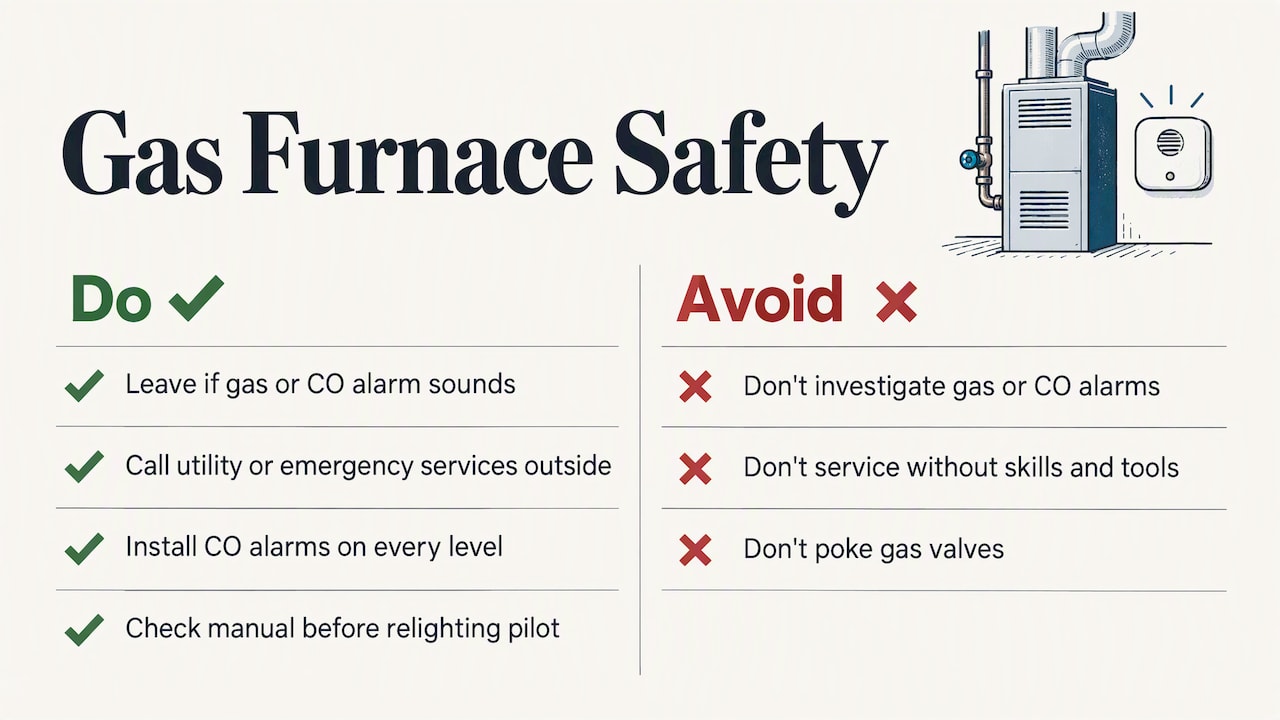
If you smell gas or a carbon monoxide alarm sounds, don’t investigate. Leave the house and call emergency services or your gas utility from outside. That is the advice in a furnace manufacturer’s troubleshooting guide.
The reason for caution is concrete. The U.S. Consumer Product Safety Commission says carbon monoxide is colorless, odorless and poisonous, and can come from furnaces and other fuel-burning heating equipment. It recommends CO alarms on every level of the home and in the hallway near bedrooms. It also says homeowners should not service fuel-burning appliances without the knowledge, skill and tools, and should limit themselves to minor adjustments in the owner’s manual.
The U.S. Department of Energy explains why: safe combustion needs controlled fuel, adequate combustion air and properly configured venting. Relighting a pilot or poking at a gas valve can upset that balance in ways you can’t see. If the furnace has a pilot light that has gone out, check the owner’s manual for the relighting procedure, and if you aren’t sure, call someone.
If you have a plug-in electric heater
Space heaters are common in Florida homes for the few cold nights each winter. For a plug-in unit, the checks are simple. One manufacturer’s FAQ says to make sure it is plugged in, verify the outlet works and reset any tripped circuit breaker. Try another outlet, ideally on a different circuit.
Many electric baseboard and portable units also have a manual reset that trips when the heater gets too hot. One maker says this often happens because the unit needs cleaning or is blocked, and if it won’t reset while the circuit is good, it needs repair or replacement. Unplug it, let it cool, clear dust and anything near it, then try once. Don’t use extension cords with heaters, and don’t keep trying a unit that keeps tripping.
The heater runs but there is no heat
This is a different symptom but often the same set of causes. If the fan blows and the air isn’t warm, go back through the checklist: thermostat operation, system power and error codes, a seated panel and the air filter. In a heat pump, cool air from the vents can also be normal for a minute or two as the system starts up, or during a defrost cycle. If it blows cool air for more than several minutes, stop and call.
When to stop troubleshooting and call
Call a professional if any of these is true:
- The basic checks didn’t work.
- You hear unusual noises, such as grinding, repeated clicking or banging.
- You smell gas (leave first, then call).
- The breaker trips a second time.
- You see a bulging capacitor, burning smell, scorch marks or water around the unit.
- You suspect an ignition, flame-sensor, gas-supply, motor, capacitor, control-board or pressure-switch problem. A manufacturer’s guide puts all of these in the professional-repair category.
The line between a quick fix and a repair isn’t always obvious. If you are weighing how far to take it yourself, this guide to basic maintenance troubleshooting steps shows how to separate what a person can safely try from what needs a trade. For heating equipment, the dividing line is fuel, high voltage and anything behind a sealed panel.
One more point that applies year-round: the CPSC recommends a professional annual inspection of heating systems, including chimneys and flues. Even in a mild climate, a heating system that sits idle for ten months is the one most likely to fail on the first cold night.
What a proper diagnostic visit looks like
When you call us about a heater that won’t start, we don’t arrive with a quote already in mind. A technician checks the thermostat, power, controls, safety switches, airflow and the components that fit your symptoms, then explains what they found and gives you a written estimate before work begins. That is our approach to every AC repair call, and it applies to the heating side of the same equipment.
If the system has no heat on a cold night, our 24/7 emergency service is the page to start from. We are veteran-owned, we offer military and veteran discounts, and our work carries a one-year labor warranty. If your system needs recurring attention, our preventative maintenance programs, annual or semi-annual, are designed to catch worn parts before the first cold front. For pricing, request a written estimate: we don’t publish a price list because every home and system is different.
Our perspective
We see the same pattern every winter in Sarasota and Manatee Counties. A homeowner hasn’t run the heat in nine months, the first cool night arrives, and the system won’t start. In most of those calls the cause is small: a thermostat that was never switched back from Cool, a filter that hasn’t been changed since spring, a breaker that tripped during a storm.
We want you to be able to check those yourself, and we’d rather you did. It saves you a service call, and it makes our visit shorter when you do need us. What we don’t want is for anyone to take a panel off a gas furnace or open a capacitor to save money. Those repairs involve fuel and stored voltage, and the cost of a mistake is far higher than the cost of a visit.
The other pattern is the sales pitch. When a heater won’t start, some companies lead with a replacement quote. We think the first job is to find out why it won’t start. Many failures are repairable, and some aren’t, and you deserve to hear which is which before anyone talks about installing new equipment. If a system really is at the end of its life, we will say so and show you why, then size a replacement for your home and Florida humidity, not just swap one box for another.
— Zach
FAQ
Why won’t my heater turn on even though the thermostat is on?
The thermostat may be calling for heat while the equipment has no power or has shut itself down. Check the switch near the furnace or air handler, make sure the panel is seated so the safety switch engages, and reset the breaker once. If the system still won’t start, a failed control board, capacitor or safety component is likely and needs a technician.
How do I reset my heater?
For central heating, turn the equipment’s breaker fully off and back on once, and make sure the panel is seated. For a plug-in electric heater, unplug it, let it cool, clear dust and blockages, then plug it in and press the reset button if it has one. If a breaker trips again, leave it off and call a professional, because repeated resets can cause further damage.
Is it safe to relight a pilot light myself?
Only if your owner’s manual has a relighting procedure and you follow it exactly, and only when there is no smell of gas. If you smell gas at any point, leave the house and call your gas utility or emergency services from outside. If the pilot keeps going out, something else is wrong, and it needs a technician.
Why does my heater run but not blow warm air?
Start with the thermostat setpoint and mode, the filter and the panel. A heat pump can blow cool air briefly during startup or a defrost cycle, but if it stays cool for more than a few minutes, call for service. A failed igniter, flame sensor or electric heating element is a common cause that needs testing.
Should I replace my heater or repair it?
It depends on the failure, not the age alone. A thermostat, capacitor or sensor repair is usually far cheaper than a new system. A cracked heat exchanger or a compressor failure on an old unit is a different conversation. Ask for a written diagnosis and estimate first, and decide with the facts in hand.
Sources
- Why Isn’t My Heating Turning On? (Sensi support)
- Furnace Not Turning On? Troubleshooting & Repair Guide (Carrier)
- Furnace Troubleshooting Guide (Carrier)
- Why is my Heating not Working? (Honeywell Home)
- Furnace Not Turning On? 12 Causes & How to Fix It (Bryant)
- Furnace Not Turning On? Try These Troubleshooting Tips (Trane)
- Heat Pump Not Turning On? Here’s What to Check (Trane)
- All About Heat Pump Capacitors and Signs of Trouble (Trane)
- Combustion Appliance Safety & Efficiency Testing (U.S. Department of Energy)
- Carbon Monoxide Questions and Answers (CPSC)
- Carbon Monoxide, the Invisible Killer (CPSC)
- The heater or electric fireplace is not turning on (Danby)
- Troubleshooting & FAQ’s (Cadet)
- Basic maintenance troubleshooting steps