
If your AC smells like burning, turn the system off at the thermostat, and at the breaker if you can reach it safely, then call a qualified HVAC technician. A faint dusty smell for a few minutes after a long idle spell can be harmless. A sharp smell of hot plastic, rubber or electrical insulation is not. Manufacturers say to shut the system off and have a technician look at it, and if you see smoke or suspect a fire, get everyone out of the house and call 911.
This guide helps you tell the smells apart, shows what usually causes each one, and explains what to do in the first ten minutes. It also covers the furnace and heat pump versions of the problem, since the same questions come up when the heat comes on in the fall.
Key takeaways
- A burning smell from your AC is a reason to stop and check. Turn the system off if you can do so safely, then call a technician.
- Dust burning off after months of sitting idle is the one common harmless cause, and it should fade within minutes, not hours.
- Hot plastic, rubber, fishy or electrical smells point to overheating wires, a failing motor or a control board problem. These carry a fire risk.
- Smoke, sparks, visible flame or a tripping breaker mean you leave the house and call 911 first, and the HVAC company second.
- A clean filter and open vents prevent many airflow-related overheating problems, but they do not fix a smell that is already electrical.
Table of Contents
- First, what kind of burning smell is it?
- Is a burning smell from your AC ever normal?
- The most common causes of an AC that smells burnt
- What to do right now if your AC smells like burning
- Can you smell burning without a fire?
- Why does the furnace or heat smell burnt?
- One more rule: never use the wrong refrigerant or a DIY fix
- What a technician should do when you call about a burning smell
- Our perspective: diagnose first, sell second
- How to keep it from happening again
- Burning smell from your AC in Sarasota or Manatee County? We can help
- FAQ
- Sources
First, what kind of burning smell is it?
The smell itself is your best clue. Before you call anyone, stand near a supply vent, then near the indoor unit, and note what you smell. Then use the table below to decide how urgent it is.
| What you smell | Likely cause | How urgent |
|---|---|---|
| Dusty, like toast or a warm hair dryer, fading in minutes | Dust on heating components or in ducts burning off | Low. Watch it. |
| Hot plastic or melting insulation | Overheating wires, a failing motor or a control board part | High. Shut off and call. |
| Hot, oily or metallic, sometimes with squealing | Blower motor or fan motor under strain | High. Shut off and call. |
| Sharp, electrical, like an overloaded outlet | Electrical fault, loose connection, failing capacitor or contactor | Emergency. Shut off at the breaker if safe, call. |
| Smoke, sparks or visible flame | Active electrical or mechanical failure | Leave the house and call 911. |
The table is a guide, not a diagnosis. Several of these causes smell alike, and a technician with a meter and a flashlight will find in minutes what you cannot find by nose.
Is a burning smell from your AC ever normal?
Sometimes, yes. Bryant notes that AC odors can come from accumulated dust as well as from electrical or mechanical issues. In a mild climate, dust builds up on components during months when the system sits idle, then burns off when it runs again.
Sarasota and Manatee County homes are a bit different. Here the AC runs most of the year, so there is less of a long idle season. A dusty smell is most likely the first time you switch to heat on a cool morning in the winter, or after a vacation with the system off. If you smell dust, it should be mild and it should fade fast. Trane describes a burning-toast smell at the start of heating as most likely dust burning off, and says it should go away in about 10 to 15 minutes.
Treat the smell as normal only if all of these are true:
- It is dusty, not chemical, plastic or electrical.
- It is mild and clearly weaker after 10 to 15 minutes.
- The system is cooling or heating normally, with no new noises.
- There is no smoke, no tripped breaker and no warm spot on the vent covers or unit.
If any one of those fails, shut it down.
The most common causes of an AC that smells burnt
A dirty filter and restricted airflow
A clogged filter or closed vents starve the system of air. The blower motor works harder, runs hot and can give off a burning smell. The same airflow problem is described for furnace blower motors, and the principle applies to your air handler too. In a humid climate there is a second problem: restricted airflow can let the evaporator coil get too cold and freeze, which strains the blower even more.
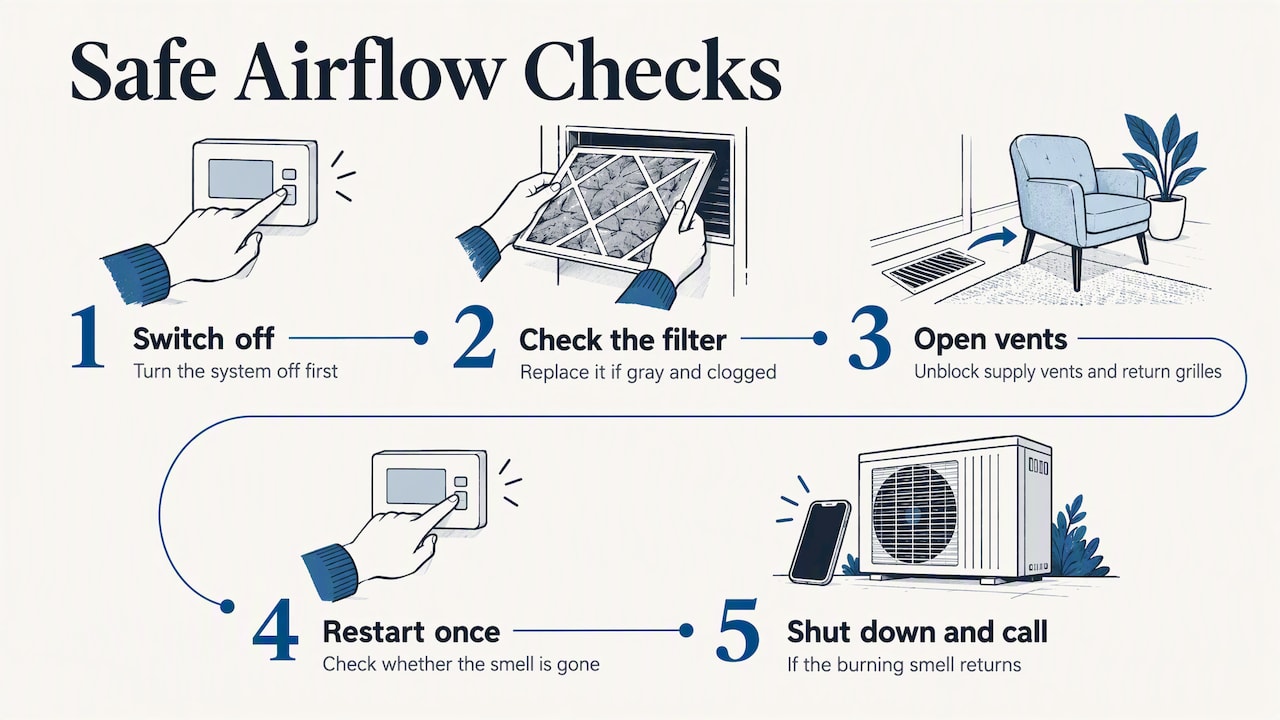
What you can safely do: with the system off, check the filter. If it is gray and clogged, replace it. Make sure supply vents and return grilles are open and not blocked by furniture. Then restart once and see whether the smell is gone. If it returns, shut down again and call.
An overheating blower or fan motor
Motors that are worn, dry or straining draw more current and heat up. You may notice a hot, oily smell, a hum or squeal, weak airflow, or a system that starts and stops. The outdoor condenser fan motor can do the same thing. A motor that is allowed to keep running can fail completely, and the cost of the repair grows with each hour it runs hot.
Electrical problems: wiring, capacitors, contactors and control boards
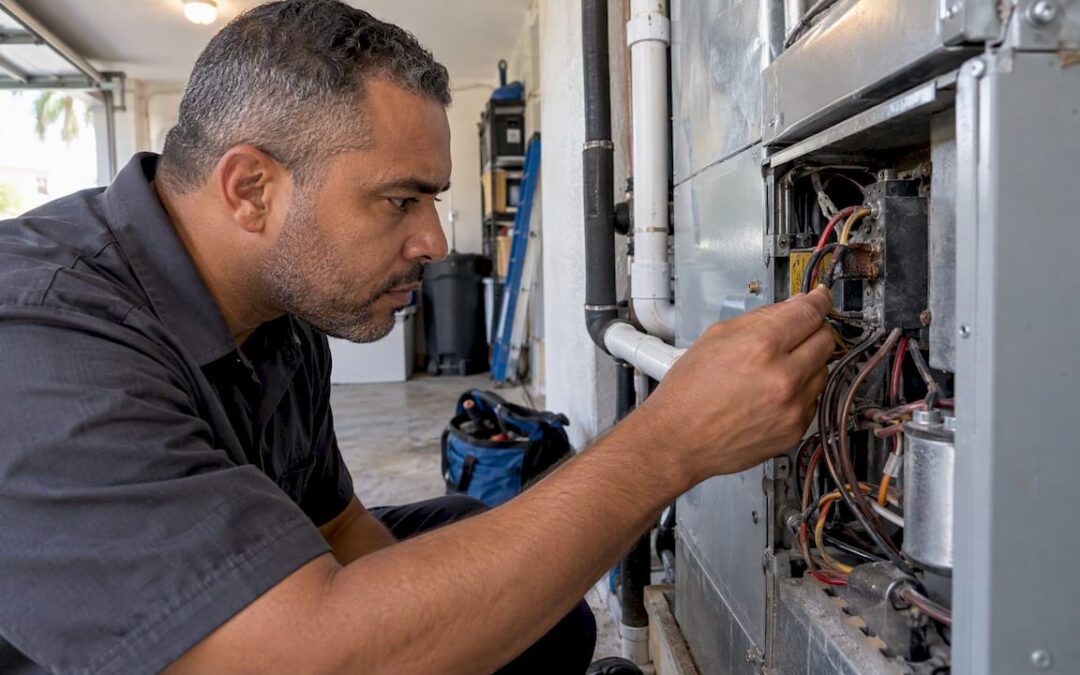
This is the cause that should worry you. Wire insulation, motor windings and control board parts that overheat produce a sharp plastic or electrical smell. A furnace parts supplier notes that these smells can mean overheating insulation, motor windings or control board components and pose a fire risk. Loose connections, a failing capacitor or a pitted contactor are typical sources in a split system.
The National Fire Protection Association is direct about it: if you notice a burning or rubbery smell from an appliance, call a qualified electrician. With an air conditioner, the right call is an HVAC technician who works on both the electrical and the mechanical side, so the cause and the repair are handled in one visit.
Debris in or near the unit
Leaves, a plastic bag, pool toys or lawn debris near the outdoor unit, or something that fell into a return, can touch hot parts and smell as it heats up. If you see debris around the condenser, turn the system off first. Only then clear what you can reach, and keep your hands away from the fan.
Dirty ducts and buildup
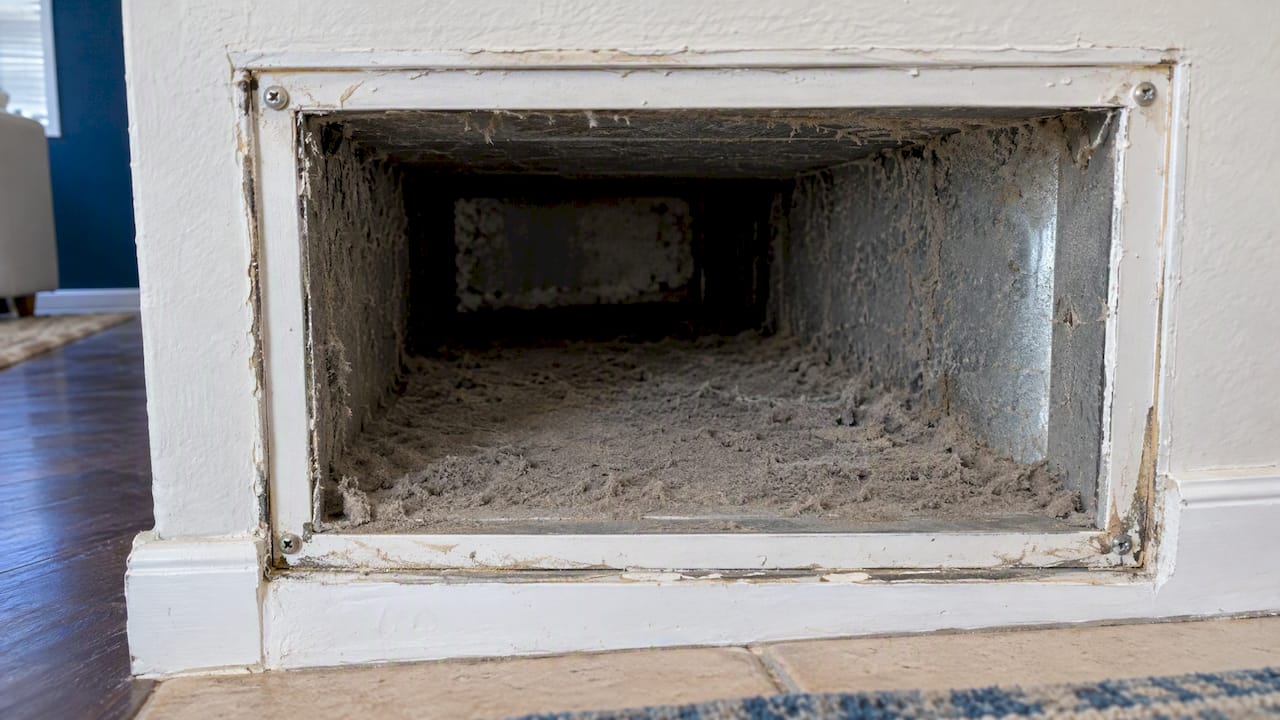
Heavy dust in ducts and on components can add to a toasty smell when the system starts. Duct cleaning will not fix an electrical smell, but if the odor is dusty and keeps coming back, it is worth checking what is circulating in the ductwork. Our air duct cleaning service is meant for this kind of buildup.
What to do right now if your AC smells like burning
Follow this order. It takes a few minutes and it keeps you safe.
- Turn the system off at the thermostat. Switch it to off, not just a higher temperature. Bryant’s guidance is to turn it off if you can do so safely and contact a qualified HVAC technician.
- Switch off the breaker if it is safe to reach. Only do this if the panel is dry, close and you can get to it without passing the unit or standing in water. If the smell is strong, skip this and go to step 4.
- Look, but do not touch. Check for smoke, scorch marks, melted plastic, or a warm wall near the air handler. Do not open electrical panels.
- If you see smoke, sparks or flames, leave. Get everyone, pets included, out and call 911. Carrier advises leaving the home and calling emergency services when you suspect a fire. Do not go back for belongings.
- Open windows if the smell is strong and it is safe to do so. Use fans only if the smell is not electrical. Avoid running anything near the suspected source.
- Call a licensed HVAC company. Tell them what you smelled, when it started, and whether the system was running when it happened.
- Leave it off until it is checked. Restarting to see if it happens again is how a small repair becomes a fire or a burned-out motor.
In Sarasota heat, having no AC is miserable, and it can be risky for young children, older adults and anyone with a health condition. That is why same-day and emergency AC repair exists. Waiting a day with the unit off is better than running a unit that is overheating.
Can you smell burning without a fire?
Yes, and that is the point. An overheating part can smell long before it flames. A smell is the warning, not the fire. That is why people ask whether there is a smell before an electrical fire. There often is, a hot or acrid odor from insulation and components, which is exactly what you should act on.
For context, NFPA 90A exists because HVAC systems can move smoke and heat through a building. The standard covers the construction and installation of air-conditioning and ventilating systems and helps limit the spread of fire and related effects, including toxic gases and smoke. A burning smell that is carried through your vents deserves a quick response for that reason too.
Call 911 first, not your HVAC company, if you see any of these:
- Visible smoke from vents or the unit
- Sparks, flames or a glow
- A breaker that trips again as soon as you reset it, with a burning smell
- A smell that keeps getting stronger after you turn the system off
If you also smell gas, do not flip light switches or run electrical devices inside the house. Carrier advises avoiding electrical switches if you suspect a gas leak. Go outside and call your gas utility or 911 from there.
For a deeper look at safe steps, there is also a helpful guide on what an HVAC burning smell means and when to leave the home.
Why does the furnace or heat smell burnt?
Many readers land on this topic when the heat comes on. The same rule applies: a short dusty smell is normal, and anything chemical, electrical or lingering is not.
- Dust burn-off. Common on the first run of the season. It should fade in 10 to 15 minutes, according to Trane.
- Electrical or plastic odors. If you notice them at the indoor or outdoor unit, shut the HVAC system off and call for repairs, per the same source.
- Clogged filter. A restricted filter can overheat a blower motor, as noted above.
- Yellow burner flames. On a gas furnace, flames should be blue. Yellow flames can indicate a cracked heat exchanger and a carbon monoxide risk. Do not run the furnace. If anyone feels dizzy, has a headache or nausea, go outside and call 911.
Heat pumps and electric furnaces use heating elements, which collect dust and are a common source of that first-use smell. The same warning signs apply.
One more rule: never use the wrong refrigerant or a DIY fix
You will find forum posts that suggest spraying coils with household products or running the AC in a special mode to “treat” a smell. For a burning smell, that is the wrong approach. Spray on live electrical parts can make things worse, and it hides the problem you need to find.
Refrigerant is another place where shortcuts are dangerous. The EPA says R-22a is a highly flammable hydrocarbon blend that is not an acceptable substitute in residential AC systems designed for HCFC-22, and that it can burn or explode if enough collects in one space and meets an ignition source. Refrigerant work belongs to licensed technicians.
DIY steps are fine for minor dusty or musty odors, such as changing a filter. For a burning or electrical smell, the guidance is to call a technician right away.
What a technician should do when you call about a burning smell
A good visit follows a clear sequence, and you should expect to hear the findings explained before any repair is quoted.
- Ask what you smelled and when. The timing (at startup, after an hour, only on heat) narrows down the cause.
- Inspect the air handler and the condenser. That means the filter, blower, wiring connections, capacitor, contactor and control board.
- Measure, not guess. Amp draw on the motors, voltage at the connections and temperature on the coil show what is straining.
- Show you the problem. You should see the burned wire, the swollen capacitor or the seized motor.
- Give a written estimate with the repair that fixes the cause, not a list of extras.
Be cautious about a visit that goes straight to a full system replacement for a smell. Sometimes replacement is the right answer, for an old unit with repeated failures. But a smell is a symptom, and the cause should be named first.
Our perspective: diagnose first, sell second
We are a veteran-owned HVAC company in Sarasota, and a burning smell call is one we treat as urgent every time. In our climate the AC runs hard for most of the year, so wiring, motors and capacitors take more wear than they would up north. When something starts to overheat, it usually does not wait for a convenient weekend.
What we want homeowners to know is that the smell is information. A thorough diagnosis tells you whether you have a ten-minute fix, such as a filter or a loose connection, or a part that has to be replaced. We would rather show you the failed part and give you an accurate written estimate than pitch a new system you do not need. That is how we work across Sarasota and Manatee Counties, including Lakewood Ranch, Venice and Longboat Key.
Our advice is simple. If it smells like burning plastic or electrical, shut it off and call. If it is faint dust that fades, keep an eye on it and change your filter. Do not run a system that smells like it is burning just to get through the afternoon.
— Zach
How to keep it from happening again
Most burning smells trace back to strain that built up quietly. A few habits lower the odds:
- Change the filter on schedule. In a home that runs the AC year-round, check it monthly and replace it when it looks gray.
- Keep vents open and clear. Closing vents to save energy can raise strain on the blower.
- Keep the outdoor unit clear. Trim plants back and clear leaves and debris.
- Schedule preventative maintenance. A tune-up that checks electrical connections, capacitors and motor amperage catches heat damage before it becomes a smell. Our preventative AC maintenance includes annual and semi-annual programs.
- Do not ignore early noises. Squealing, humming or short cycling often comes before an overheated motor.
If your system is old and repairs keep adding up, ask about options. Our team can walk you through AC installation sized for Florida humidity, but only after we know the repair is not the better value.
Burning smell from your AC in Sarasota or Manatee County? We can help
We offer same-day AC repair and 24/7 emergency response across Sarasota and Manatee Counties. Every visit starts with a full diagnosis, followed by a transparent written estimate. Our work carries a one-year labor warranty and a satisfaction guarantee, and we offer discounts for military members and veterans.
If your system is off and the house is heating up, book emergency AC repair now, or see our standard AC repair service if you can wait for the next available visit.
FAQ
Should I turn off my AC if it smells burnt?
Yes. Turn it off at the thermostat, and at the breaker if you can reach it safely, then call a qualified HVAC technician. Do not restart it to see whether the smell returns. If you see smoke or suspect a fire, leave the house and call 911.
Why does my AC smell burnt when I first turn it on?
Often it is dust that has settled on components while the system sat idle. It should be mild and fade within about 10 to 15 minutes. If it smells like plastic or electrical parts, or it does not fade, shut the system off and call for service.
Why does my furnace smell burnt?
The first run of the heating season often burns off dust, and that smell passes quickly. A clogged filter, an overheating blower motor or electrical parts can also cause it. If the smell is chemical or electrical, or the flames look yellow instead of blue, turn the furnace off and call a technician.
Can I smell burning when there is no fire?
Yes. Overheating insulation, motors and electrical parts give off a smell before anything ignites. That is the warning to act on. Shut the system down and have it checked before it can progress to a fire.
How do I get rid of a burning smell from the vents?
For a dusty smell, change the filter and run the system again. For a burning or electrical smell, there is no home fix: the cause has to be found and repaired. Air fresheners and coil sprays only cover the smell and can hide a real problem.
Sources
- Why Does My AC Smell? Common Causes & Solutions, Bryant
- Is This Normal? HVAC Smells and Sounds, Explained, Trane
- Furnace Burning Smell? Identify the Cause & When to Worry, National HVAC Parts
- Electrical Safety Tips, NFPA
- NFPA 90A, Standard for the Installation of Air-Conditioning and Ventilating Systems
- Emergency HVAC Repair, Carrier
- Homeowners and Consumers: Frequently Asked Questions, US EPA