
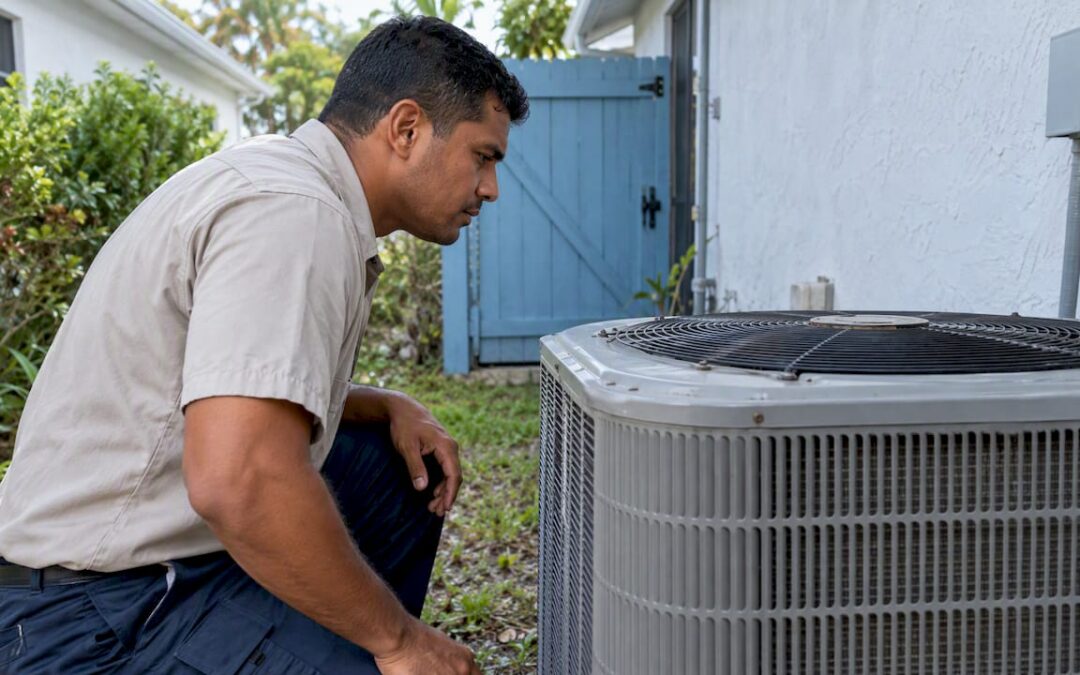
If your air conditioner has suddenly gotten loud, the sound itself tells you most of what you need to know. Buzzing usually points to an electrical part, banging or grinding to something loose or broken, hissing to a possible refrigerant leak, and screeching to a motor or belt in trouble. Some noises mean you should shut the system off right now. Others can wait for a scheduled visit. This guide sorts them out so you know which is which.
We are AC Heroes, a veteran-owned HVAC company in Sarasota. We hear “my AC is so loud” calls every summer from homes in Sarasota, Bradenton, Lakewood Ranch, Venice and Longboat Key. Here is how we think about those calls.
TL;DR
- A low, steady hum while the system runs is normal. A sudden change in volume or a brand-new sound is the warning sign.
- Buzzing, grinding, banging, clanking or hissing: turn the system off at the thermostat, and at the breaker if the noise continues, then call a technician.
- A burning smell, sparks, or a unit that runs but stops cooling alongside the noise is a safety issue. Shut it off immediately.
- You can safely change the filter and clear leaves from the outdoor unit. Refrigerant, capacitors, contactors and motors are work for a certified technician.
- A loud system is usually a strained system. Fixing the cause early costs less than replacing a compressor in August.
Table of Contents
- Is your AC supposed to make noise?
- What the sound tells you: a quick guide
- Buzzing: the most common complaint
- Banging, clanking, rattling and grinding
- Hissing: a possible refrigerant leak
- Screeching, squealing and whistling
- What you can safely check yourself
- Should you turn off a noisy AC?
- Why a house can have a loud AC without anything being broken
- What about a loud furnace?
- Our perspective: a noise is a symptom, not a verdict
- Getting your noisy AC looked at in Sarasota and Manatee County
- FAQ
- Sources
Is your AC supposed to make noise?
Yes, some. A central air conditioner has a compressor, a fan and a blower motor, and moving air through ducts has its own sound. A low, steady hum while the unit is running is normal operation, according to Daikin’s guidance on air conditioning noise levels. What is not normal is a sudden change: a sharp jump in volume, new rattles, or a persistent high-pitched screech.
So the first question is not “how loud is it?” but “what changed?” If the unit has always been a bit noisy and you have simply noticed it more, that points to sizing, ductwork or aging equipment. If it was quiet last week and loud today, something has shifted, loosened or started to fail.
One sound that is not a fault: your thermostat flashing “Cool On” for a few minutes after a power flicker or a quick restart. That is a built-in delay that protects the compressor from short-cycling, typically lasting 3 to 5 minutes. Wait it out.
What the sound tells you: a quick guide
| Sound | Likely cause | What to do |
|---|---|---|
| Buzzing or loud humming | Failing capacitor, contactor, loose wiring, fan motor, or a compressor struggling to start | Shut off the system and call a technician |
| Banging, clanking, rattling | Loose parts, a loose fan blade or blower wheel, or a failing internal component | Shut off if it is loud or getting worse; tighten nothing yourself |
| Grinding | Worn motor bearings or a failing motor or compressor | Shut off immediately and call |
| Hissing | Possible refrigerant leak | Shut off and call a certified technician |
| Screeching or squealing | Motor or fan bearings, or a belt on older systems | Call for service soon |
| Whistling or humming from vents | Restricted airflow: dirty filter, blocked vents, duct problems | Check the filter first |
| Roaring, like a jet | Often strain on the system or airflow problems | Turn it off and have it diagnosed |
The next sections explain each one in plain terms.
Buzzing: the most common complaint
Buzzing is the sound people search for most, and it deserves respect. Buzzing can signal an electrical issue such as a failing capacitor, contactor or loose wiring. Other sources add the fan motor, or a compressor that is struggling to start, to that list.
A capacitor gives the compressor and fan motors the jolt they need to start and keep running. When it weakens, you often hear a buzz or hum, the fan may not spin, and the air from your vents turns warm. A contactor is the switch that sends power to the outdoor unit. When it is worn or pitted, it can chatter or buzz.
What to do:
- Turn the thermostat to off. If the buzzing continues at the outdoor unit, switch off the AC breaker.
- Do not open the electrical panel on the outdoor unit. Capacitors can hold a charge even with the power off.
- Note when it happens: at startup, constantly, or every few minutes. That detail helps a technician narrow the cause quickly.
- Call for repair rather than running it “one more day.” Continuing to run a unit with an electrical fault can cause further, more expensive damage.
If the buzz comes from a vent or the ceiling instead of the outdoor unit, a loose vent cover or a vibrating duct is possible, and that is a far less urgent problem.
Banging, clanking, rattling and grinding
These sounds often point to loose or broken internal parts. Banging, clanking or grinding often indicates a problem with a component such as the compressor, blower wheel or fan motor.
The range matters here:
- A rattle can be as simple as a loose access panel, a screw that has backed out, or a stick in the fan. After a Gulf Coast storm, debris in the outdoor unit is a common culprit.
- A rhythmic bang or clank suggests something is loose and hitting something else, such as an unbalanced or loose blower wheel or fan blade.
- Grinding is the one to take most seriously. It often means worn bearings or a motor on its way out, and metal on metal gets worse quickly.
If it is a loose panel vibrating, it is generally safe to wait for a service call. If the noise comes with the unit failing to cool, a burning smell or sparking, that becomes a critical safety issue calling for an immediate shut-off and professional help.
Hissing: a possible refrigerant leak
A steady hiss from the indoor coil or the refrigerant lines can mean refrigerant is escaping. Your AC also loses cooling power, ice may form on the lines, and the system runs longer and longer without reaching the set temperature.
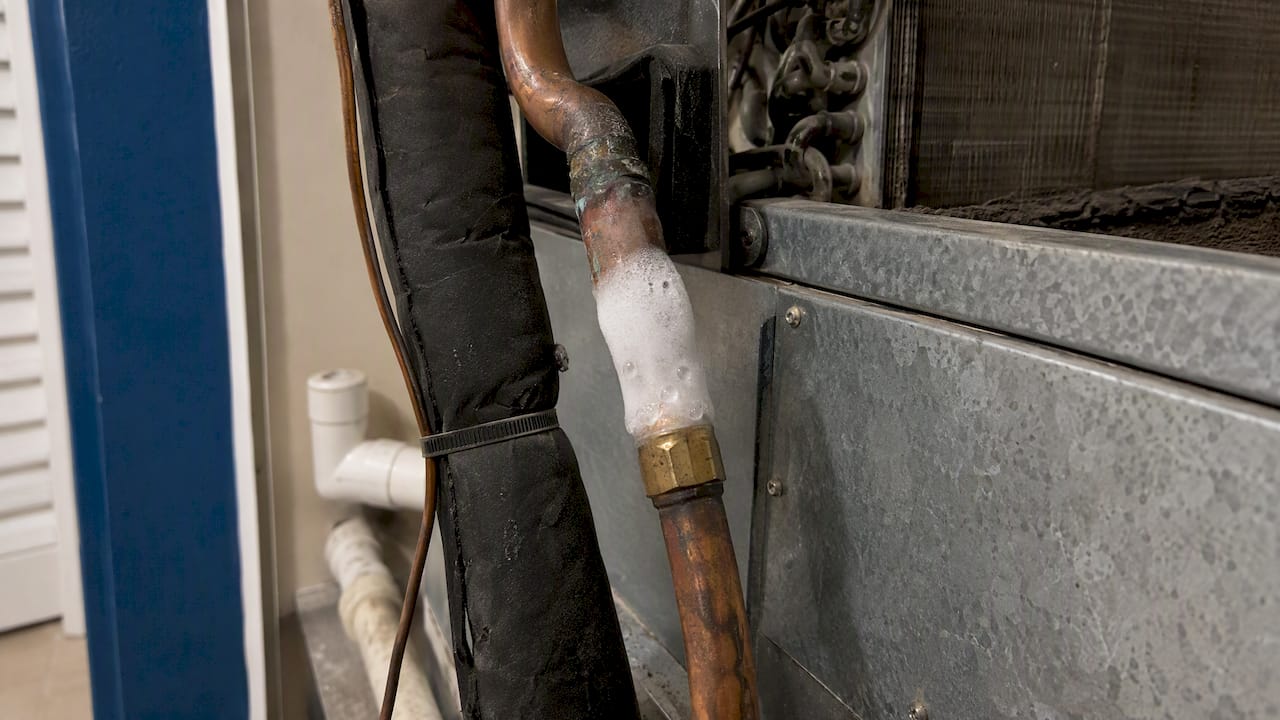
This is not a DIY repair, and not only because of the technical difficulty. Under Section 608 of the Clean Air Act, technicians who maintain, service or repair equipment that could release refrigerants must be certified. Leaving a leak alone leads to poor cooling, can burn out the compressor, and releases refrigerant into the atmosphere.
Turn the system off and call a certified technician. A good one will find the leak first, not just add refrigerant and leave.
Screeching, squealing and whistling
A high-pitched screech typically means a motor or fan bearing is failing or dry. It will not fix itself. The longer it goes, the more likely the motor seizes, and a seized motor in July means a hot house while you wait for parts.
Whistling or a sort of whooshing hum from the vents is different. It usually signals restricted airflow. Dirty filters, blocked vents or ductwork problems are the top suspects. The U.S. Department of Energy notes that cleaning or replacing filters can cut energy use by 5 to 15 percent in the right conditions, which is a good reason to check the filter first. A clogged filter also strains the system, and a strained system is a louder one.
What you can safely check yourself
Before you call, spend five minutes on the basics. None of these involve opening panels or touching wiring.
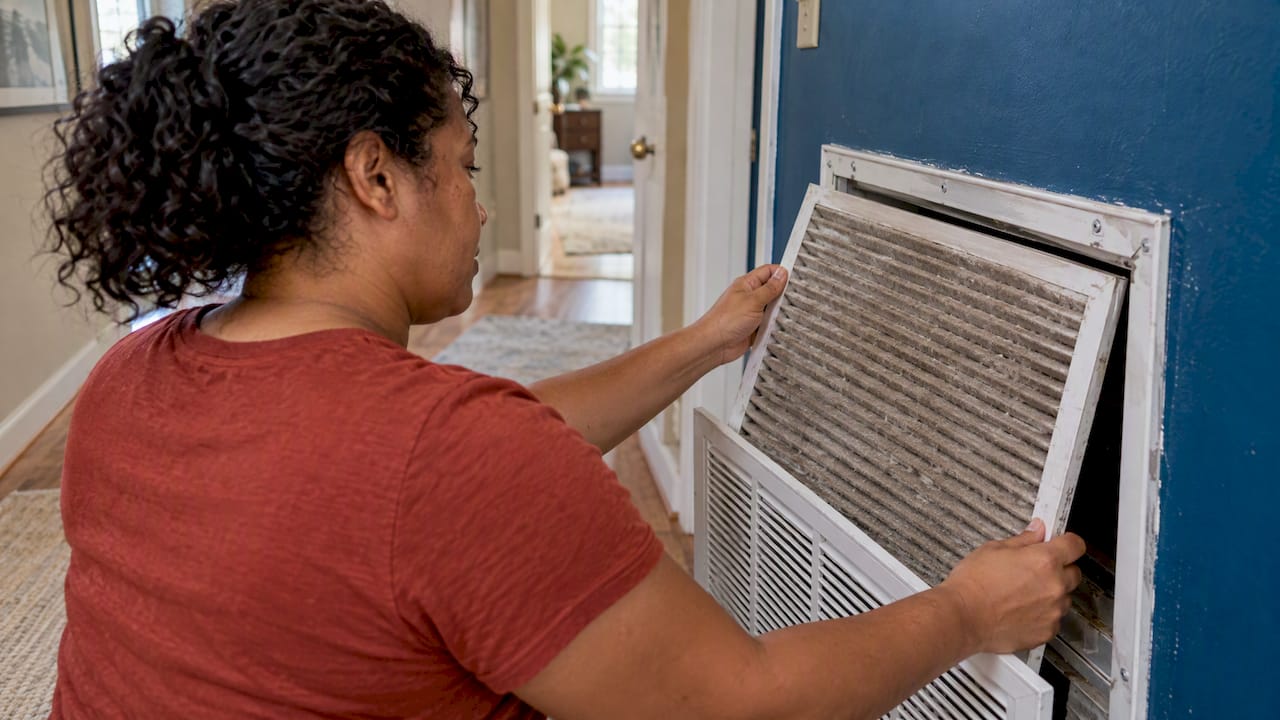
- Check the air filter. If it is gray and furry, replace it. Florida homes run AC most of the year, so filters clog faster than in cooler states.
- Look at the outdoor unit. With the power off, clear leaves, palm fronds, mulch or toys from around the condenser. Keep a couple of feet of clearance.
- Open the vents. Make sure supply registers and return grilles are open and not blocked by furniture or rugs.
- Listen for the source. Indoor air handler, outdoor condenser, or the vents themselves? Telling a technician which one saves time.
- Watch the thermostat. If it says “Cool On” after a restart, it may just be the time delay.
If the noise stops after the filter swap or debris removal, you were lucky. If it does not, stop there. Carrier’s own guidance is that anything involving refrigerant, high-voltage electricity or complex mechanical parts such as compressor or blower motor failure needs a certified technician, and DIY work on sealed systems can void manufacturer warranties.
Should you turn off a noisy AC?
Use this rule of thumb:
- Turn it off now: grinding, banging that is getting louder, loud buzzing, hissing, a burning smell, sparks, a tripped breaker, or a unit that runs but blows warm air.
- Run it carefully until service: a light rattle that you can trace to a panel or vent, or a mild whistle that clears after a filter change.
When in doubt, shut it off. In a Florida summer that feels like a big sacrifice, but running a failing compressor can turn a repair into a replacement. If it is the middle of the night or a heat wave, our emergency AC repair service exists for exactly that situation.
Why a house can have a loud AC without anything being broken
Sometimes the system is working as built, and the noise comes from the design. Two causes come up often in our area.
Oversizing. Many homeowners assume bigger is better. In fact, oversized cooling systems can be noisy and provide inadequate temperature and humidity control. In Florida humidity, that matters: an oversized unit cools the air fast, shuts off, and leaves moisture behind. Correct sizing should come from a load calculation such as ACCA Manual J, not an old rule of thumb based on square footage alone.
Ductwork. Undersized, leaky or constricted ducts make air whistle, rumble and hum. The Department of Energy notes that leaky or clogged ducts are worth having a professional clean and air seal. Fixes can be as simple as adding a duct, enlarging some, or adjusting the fan speed. If ductwork is the source, our air duct cleaning and ductwork services are where to start.
If your system is also old and loud, it may be the right time to compare repair against replacement. Newer equipment can be considerably quieter. Carrier lists one of its air conditioner models with a sound level as low as 67 decibels, for instance. Our AC installation work is sized for Florida humidity rather than guessed from square footage.
What about a loud furnace?
Many readers also ask why a furnace is so loud. In our part of Florida, heating is a smaller part of the year, but the logic carries over. A new bang on startup, a squeal from the blower, a rattling panel or a dirty filter choking airflow are all reasons for a service visit. A burning smell, or any sign of gas or carbon monoxide, means you leave the house and call your utility or emergency services first. We handle heating services as well, and the same rule applies: a sudden change is the signal.
Our perspective: a noise is a symptom, not a verdict
We have a simple principle at AC Heroes: diagnose first, sell second. A loud AC makes homeowners nervous, and that is exactly when some companies push a big quote. A noisy blower or a failing capacitor is rarely just a noisy part. It is a sign of strain on the whole system, and that strain shows up as higher electric bills and less comfort.
Here is how we handle a noise call:
- We find out where the sound comes from and when it happens before touching anything.
- We run a thorough diagnostic, then give you a written estimate so you know what is wrong and what it costs.
- If the answer is a loose panel or a dirty filter, we say so. If it is a capacitor, a motor or a duct problem, we show you why.
- Our work carries a one-year labor warranty, and we stand behind it with a satisfaction guarantee.
The best noise repair is the one you never need. A spring or fall tune-up lets a technician catch worn bearings, weak capacitors and loose hardware before they turn into a breakdown. The Department of Energy says regular maintenance can lower cooling costs by 5 to 10 percent and extend equipment life. We offer annual and semi-annual programs for exactly this reason.
— Scott
Getting your noisy AC looked at in Sarasota and Manatee County
If your system is buzzing, banging, hissing or just louder than it used to be, we can help. We offer same-day AC repair across Sarasota and Manatee Counties, including Lakewood Ranch, Venice and Longboat Key, with 24/7 urgent response when the noise comes with no cooling. Military and veteran discounts are available. Prices are not listed online because every system and every fault differs, so you get a written estimate after diagnosis, before any work begins.
Want to avoid the next surprise? Look at our preventative AC maintenance programs, available annually or semi-annually.
FAQ
Should I turn off my AC if it’s making noise?
Yes, if the noise is grinding, banging, loud buzzing or hissing, or if you smell burning or see sparks. Turn it off at the thermostat first, and at the breaker if the noise continues. A light rattle from a loose panel or vent is less urgent and can wait for a service call.
Why is my AC making a buzzing sound?
Buzzing most often comes from an electrical part, such as a failing capacitor, a worn contactor or loose wiring. It can also come from the fan motor or a compressor that is struggling to start. Because these parts involve high voltage, a licensed technician should handle the repair.
What is the 3-minute rule for AC?
It is a time delay that protects the compressor. After the system shuts off, or after a power flicker, the compressor waits about 3 to 5 minutes before restarting to prevent short-cycling. A flashing “Cool On” message on your thermostat during that time is normal, not a fault.
Why is my AC so loud all of a sudden?
Sudden noise usually means something changed: a loose part, debris in the outdoor unit, a dirty filter restricting airflow, or a failing motor or capacitor. Check the filter and clear any debris first. If the sound continues, have a technician find the cause before it gets worse.
Can a new AC be too loud?
Yes. A system that is too large for the home can run noisily and handle humidity poorly. Proper sizing with a load calculation such as ACCA Manual J, and well-designed ducts, keep a new system quiet and effective.
Sources
- U.S. Department of Energy: Guide to Home Heating and Cooling
- U.S. Department of Energy: Tips for Lowering Your Cooling Costs
- EPA: Section 608 Technician Certification Requirements
- HVAC.com: Why Is My AC Making a Buzzing Noise?
- Today’s Homeowner: Air Conditioner Making Loud Buzzing Noise
- Daikin: Noise Levels in Air Conditioning Systems
- Carrier: “Cool On” Flashing on Thermostat
- Carrier: Air Conditioner Repair Guide
- Carrier: Performance Air Conditioner 26SPA6
Recommended
- Common AC Repair Issues in Sarasota & Bradenton – And Why You Shouldn’t Wait to Call AC Heroes
- 5 Signs Your AC Needs Professional Repair Before Summer Hits Hard in Sarasota
- Emergency AC Repair & Service
- When Your AC Breaks Down in Sarasota Heat: Why 24/7 Emergency Repair from AC Heroes Is a Lifesaver