
A high heating bill almost always comes from one of three things: it was colder than last year, the price of your energy went up, or your system and home are using more energy than they should. The first two you can’t change. The third you can. Ducts that leak, a dirty filter, a thermostat set too high, backup electric heat running too often and equipment that hasn’t been serviced in years are the usual culprits.
Here in Sarasota and Manatee Counties, winters are short and mild, so a heating bill that jumps can feel like a surprise. That surprise is worth a closer look, because the same system, ductwork and thermostat habits that drive a winter spike also drive your cooling costs the rest of the year.
Key Takeaways
- Compare your bill with the same month last year, not last month, and check the number of days in the billing period before you assume something is wrong.
- A high bill does not automatically mean your heater is failing. Weather, rates, thermostat settings, filters, duct leaks and insulation all play a part.
- Electric resistance heat costs much more to run than a heat pump, so heavy use of backup or strip heat can drive a spike.
- Regular maintenance and sealed ducts are two of the most reliable ways to protect efficiency, according to federal guidance.
- If the bill climbs while the weather and your habits stay the same, or the system struggles to keep up, it is time for a professional diagnosis.
Table of Contents
- Start by Reading the Bill Correctly
- Why Rates Are Part of the Story
- How Much of Your Bill Is Heating?
- Common Causes of a High Heating Bill
- Quick Checks You Can Do Today
- When a High Bill Means Your System Needs a Professional
- Our Perspective
- Get a Straight Answer on Your Bill
- How to Keep Your Heating Bill Down
- FAQ
- Sources
Start by Reading the Bill Correctly
Before you blame the heater, find out what actually changed. A heating bill comes down to the price of your fuel, how cold it was, and which fuel heats your home. Energy Factbook suggests comparing against the same month a year ago rather than last month, checking the number of billing days, and working out whether you used more energy, the price per unit rose, or the bill structure changed.
That last point matters more than most people expect. Billing periods vary, and DTE Energy notes that they can range from 26 to 35 days. A 35-day cycle simply has more days of usage in it than a 26-day one, even if your habits did not change.
Here is a quick way to sort out your bill:
- Pull up the same month from last year and compare the kilowatt-hours (or therms) used, not just the dollar amount.
- Count the days in each billing period.
- Look at the rate per unit. If usage is flat but the dollars are up, the price changed.
- Think about what changed at home: more people working from home, a space heater, guests, a new appliance.
Utility bills also vary for reasons outside your house. Virginia Natural Gas lists weather changes, month-to-month fuel costs, billing cycle length, lifestyle changes and new gas appliances such as a gas fireplace as common reasons bills move. If usage and habits match last year and the rate is the only thing that moved, you are looking at a price issue, not an equipment issue.
Why Rates Are Part of the Story
Part of what you are seeing may be the market. Consumer Reports points to costly upgrades to aging grid infrastructure, storm and wildfire damage, volatile fossil fuel prices, power-hungry data centers and utility profit margins as reasons electricity prices are rising. It also notes that natural gas is the most common fuel for power generation in the country, and that its price can double or triple in a single year.
That is not something you can fix with a wrench, but it explains why the same winter habits can cost more than they used to. It also makes the parts you control more valuable: every kilowatt-hour your system doesn’t waste is worth more when rates are climbing.
How Much of Your Bill Is Heating?
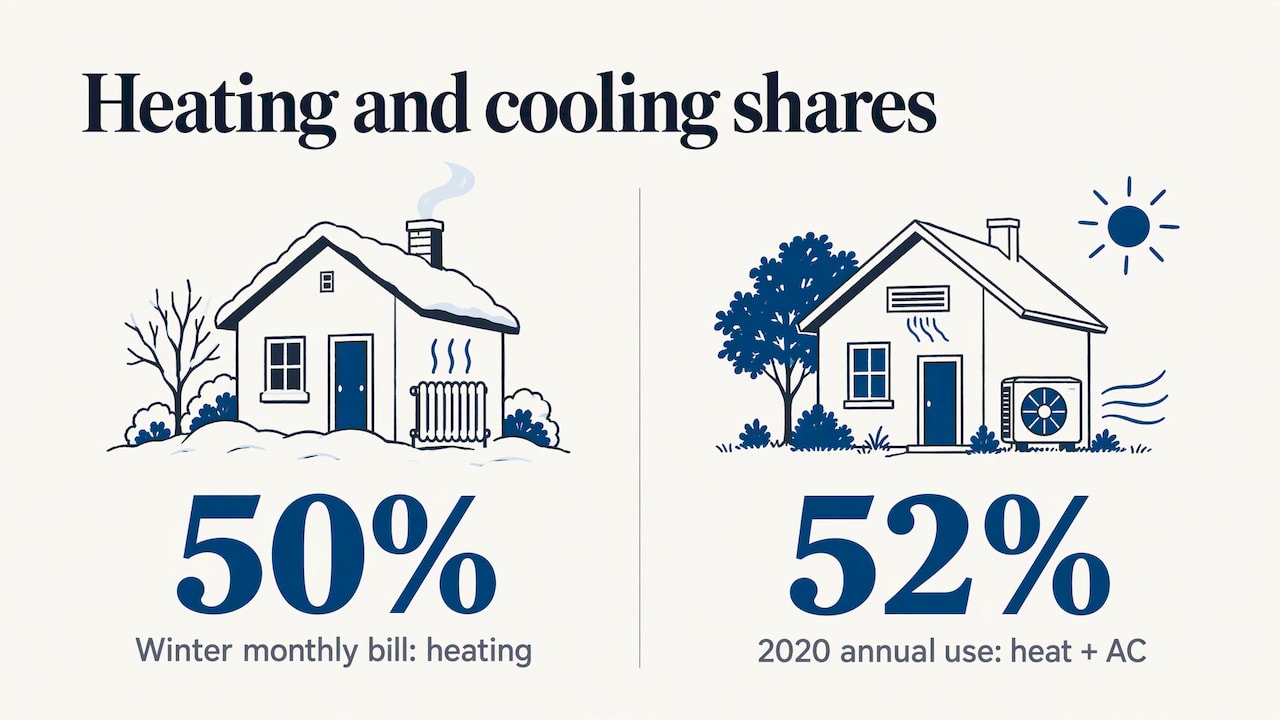
Heating and cooling are the biggest line items in most homes. DTE Energy says winter heating can account for about 50% of a monthly energy bill. Direct Energy, citing the U.S. Energy Information Administration, reports that space heating and air conditioning made up 52% of the average household’s annual energy use in 2020.
Those figures come from utilities in colder states, so Florida homes will see a smaller heating share. The principle still holds here. When your bill jumps, heating and cooling are the first place to look. As a Citizens Utility Board outreach director told Consumer Reports, start with heating and cooling because they make up the largest slice of most homes’ energy use, then ask what you set the thermostat to and whether you leaned on a space heater during a cold snap.
Common Causes of a High Heating Bill
Thermostat settings and habits
Every degree matters. Chelan PUD recommends letting the thermostat float down to 68°F in winter, and lower when you are sleeping or away. The U.S. Department of Energy says adjusting the thermostat when you are out or asleep can save as much as 10%, with about 1% saved for each degree of setback over an eight-hour period.
If your thermostat screen is blank, glitchy or not responding, the system may be running when it shouldn’t, or not at all. Our guide on what to check when a thermostat goes blank walks through the first steps.
Electric resistance heat versus a heat pump
This one is easy to miss. Chelan PUD points out that electric resistance heat is inefficient, and that heat pumps can use as little as half the energy for the same heating. If your system leans on electric backup heat for long stretches, whether because of a cold snap, a setting problem or a component that isn’t doing its job, your meter will show it quickly.
A large jump in usage during a stretch when temperatures weren’t unusual is worth having a technician look at.
A dirty filter
ENERGY STAR advises checking your furnace’s air filter monthly during heavy-use winter months. A dirty filter slows airflow and makes the system work harder. It is the cheapest fix on this list and the one most often skipped.
Leaky or damaged ducts
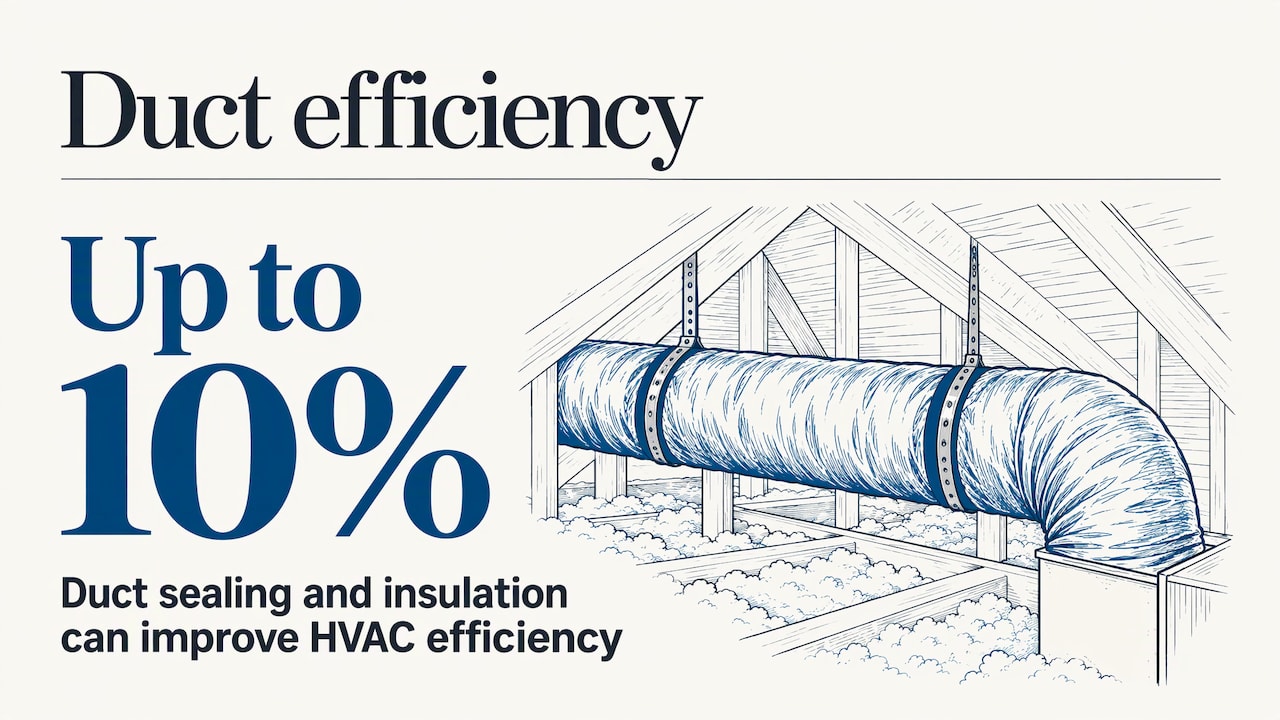
Your system can only heat the house if the warm air reaches the rooms. ENERGY STAR says sealing and insulating ducts, especially those in the attic or crawlspace, can improve HVAC efficiency by as much as 10%. Its guidance on identifying the problems you want to fix lists high heating or cooling bills, hot and cold rooms, and uneven temperatures between rooms as signs of air leaks, insufficient insulation or duct problems. It recommends looking for cracks, kinks, loose air supply boots or missing insulation on ducts.
In Florida, many ducts run through hot attics, which makes leaks and disconnected sections costly in both seasons. If you notice rooms that never get comfortable, our ductwork services cover repair and replacement, and air duct cleaning can address buildup inside the system.
Air leaks and insulation
A house that leaks air makes the heater run longer. The same ENERGY STAR page recommends checking attic insulation levels. If you want to find leaks precisely, the Department of Energy explains that professional home energy assessments commonly use a blower door test to measure airtightness and locate leaks, plus a thermographic scan with an infrared camera that shows temperature differences along walls, roofs, windows and doors.
Equipment that has not been serviced
My Sentinel Home notes that equipment left unserviced for several years can lose efficiency through dirty burners or coils, a drifting blower, or a control that no longer stages correctly. It also stresses that a higher bill does not automatically mean the furnace or heat pump is failing. Weather, thermostat settings, filters, runtime, air leakage, ducts, insulation and age can all contribute, which is why a proper diagnosis beats guessing.
Quick Checks You Can Do Today
These take minutes and cost almost nothing:
- Check the filter. Replace it if it is dirty.
- Look at the thermostat. Confirm the schedule and setpoint are what you think they are, and that it is set to heat, not stuck in a backup or emergency mode.
- Walk the house. Note rooms that are noticeably colder or warmer than the rest.
- Check the vents. Make sure supply and return vents aren’t blocked by furniture or rugs.
- Look at your usage history. Compare kilowatt-hours with last year, as described above.
- Think about the space heater. Portable electric heaters add up quickly over a cold week.
If the heater won’t start at all, see what to check when a heater won’t turn on or what to do when heat isn’t working.
When a High Bill Means Your System Needs a Professional
A single expensive month after a cold week is usually weather. Certain patterns point to the system itself:
| What you notice | What it can point to |
|---|---|
| Bills keep rising while weather and habits stay the same | Declining efficiency, dirty components, duct leaks |
| The system runs almost constantly but the house never gets comfortable | Airflow problems, duct leaks, a unit that is struggling to keep up |
| Some rooms stay cold while others are fine | Duct problems, blocked or disconnected supply runs |
| Strange noises, odd smells or short cycling | A component failing, needs prompt inspection |
| The system is many years old and hasn’t been serviced | Lost efficiency from dirty parts or controls that no longer stage correctly |
| Heat only works with the backup running | A heat pump or control problem that is costing you in electricity |
A technician can test airflow, check electrical components, inspect the ductwork and tell you whether the issue is a repair, a maintenance item or a sign the equipment is near the end of its life. If the diagnosis points to replacement, an installation sized for your home matters, because an oversized or undersized system wastes energy. Our AC installation service is built around sizing for Florida’s humidity and your specific house.
A note on safety: if you smell gas, hear a loud banging, see smoke or smell burning from a vent, turn the system off and call your gas utility or emergency services first, then a technician.
Our Perspective
Most of the high-bill calls we hear about aren’t a dead system. They are a system that has been quietly losing ground for a while: a filter nobody changed, a duct that came loose in the attic, a thermostat schedule that no longer fits the household.
That is why we start with a thorough diagnostic before anyone talks about parts or replacement. If your bill is high because of a loose duct or a dirty coil, you should hear that, with a written estimate, rather than a scare quote for new equipment. Honest numbers are how we earn the next call.
We also believe in preventative maintenance, because it catches the small problems while they are still inexpensive. A seasonal tune-up is the easiest way to keep a Florida system running the way it was designed to, in both the cooling and heating seasons.
As a veteran-owned company rooted in Sarasota and Manatee Counties, we treat your house like a neighbor’s house. We back our work with a one-year labor warranty.
Zach
Get a Straight Answer on Your Bill
If you have worked through the checks and the numbers still don’t add up, we can find out why. AC Heroes serves homeowners across Sarasota and Manatee Counties, including Lakewood Ranch, Venice and Longboat Key. We start with a thorough diagnostic, give you a transparent written estimate, and stand behind our work with a one-year labor warranty. Military and veteran discounts are available.
For a system that is struggling or a home that won’t hold a comfortable temperature, book AC repair, or if it can’t wait, emergency AC repair is available around the clock. To keep problems from building up in the first place, our preventative maintenance programs come in annual and semi-annual options.
How to Keep Your Heating Bill Down
Once you know the cause, these habits protect you going forward:
- Follow a maintenance schedule. The Department of Energy says regular maintenance can reduce heating and cooling costs by 5% to 10%.
- Use setbacks. Lower the thermostat when you are asleep or away, rather than constantly adjusting it up and down.
- Change filters on schedule. Check monthly in heavy-use months.
- Seal and insulate ducts. Especially in attics and crawlspaces.
- Limit space heaters. Portable electric heaters can quietly run up the bill.
- Watch your usage, not just the total. Comparing against the same month last year shows you quickly whether something has changed.
Because the same equipment cools your home for most of the year, these steps pay off year-round. Moisture and humidity also affect how your system performs, so if you notice musty smells along with higher bills, read about mold in your HVAC system.
FAQ
Why is my heating bill so high this month?
Check three things first: whether the weather was colder than the same month last year, whether the billing period had more days, and whether your rate per unit went up. If none of those explains it, look at thermostat settings, filters, ducts and any space heaters you used. A persistent jump with no clear cause is worth a technician’s inspection.
Does a high heating bill mean my heater is broken?
Not necessarily. As My Sentinel Home explains, weather, settings, dirty filters, duct problems, air leakage, insulation and age can all raise costs without the equipment failing. A professional diagnostic will tell you whether you have a repair issue or just a house that needs better sealing or maintenance.
Is electric heat more expensive than a heat pump?
Generally, yes. Chelan PUD notes that electric resistance heat is inefficient and that heat pumps can use as little as half the energy. If your system relies heavily on backup electric heat, that can show up as a big jump on your bill.
How much can maintenance and thermostat changes save?
The Department of Energy says a regular maintenance schedule can reduce heating and cooling costs by 5% to 10%. It adds that setting the thermostat back when you are asleep or away can save as much as 10%. Your own savings depend on your home and system.
Can leaky ducts really raise my bill?
Yes. ENERGY STAR says sealing and insulating ducts, especially in attics and crawlspaces, can improve HVAC efficiency by as much as 10%. Rooms that never get comfortable are a common sign that the ducts need a look.
Sources
- DTE Energy: How to Take Control of Your Home’s Winter Heating Bill
- Chelan PUD: Is Your Electric Bill High
- My Sentinel Home: Why Is My Heating Bill So High?
- ENERGY STAR: Identify the Problems You Want to Fix
- Virginia Natural Gas: Understanding Your Bill
- Consumer Reports: Why Is Your Electric Bill So High?
- Direct Energy: Why is My Electric Bill So High in Winter?
- Energy Factbook: Why Is My Heating Bill So High?
- U.S. Department of Energy: Guide to Home Heating and Cooling
- ENERGY STAR: Save on Heating Costs This Season
- U.S. Department of Energy: Guide to Home Energy Assessments