
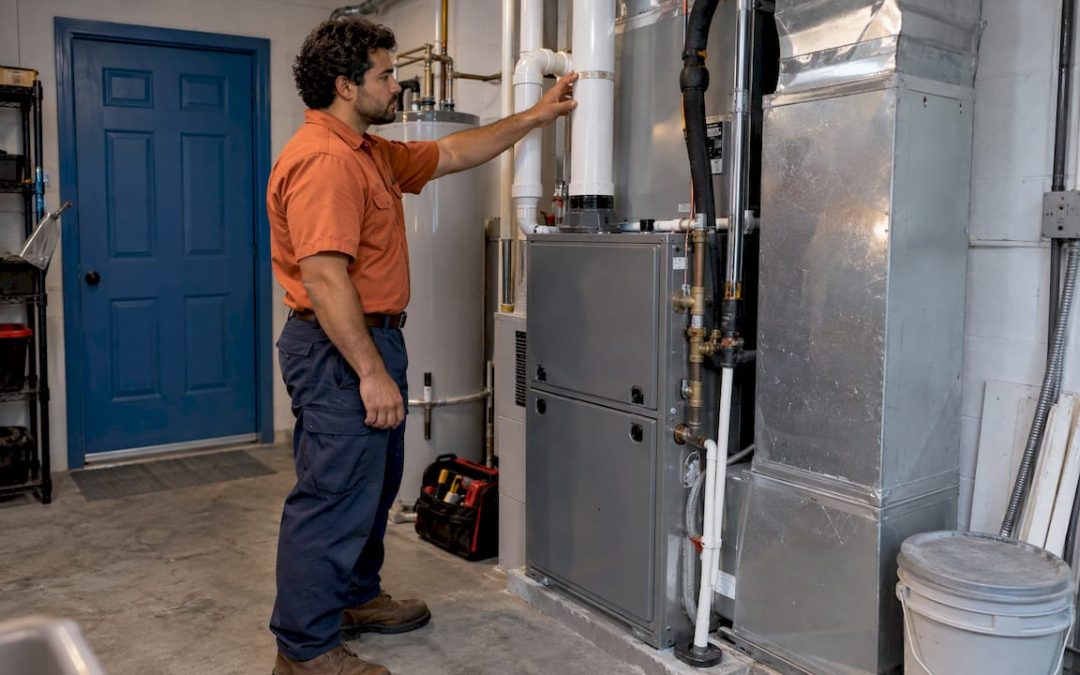
A good furnace installation starts before the new unit arrives: a room-by-room heat load calculation decides the size, a licensed installer swaps the unit and checks the gas, venting and ducts, and the job ends with measured airflow and safety tests. The equipment matters less than those steps. Consumer Reports found that contractors cited human error, poor maintenance or improper installation twice as often as defective equipment as the reasons for furnace service calls.
If you are in Sarasota or Manatee County and need heating work, our heating services start with a full diagnostic and a written estimate before any work begins. This guide covers what a proper job looks like, so you can judge any bid, ours included.
Key Takeaways
- Size the furnace with a Manual J heat load calculation, not square footage or the old unit’s label. Oversizing is one of the most common installation mistakes.
- A complete job includes removal of the old unit, gas, vent and electrical checks, duct sealing, and tested airflow, temperature rise and combustion.
- Furnace installation is licensed, permitted work. It is not a weekend project, because gas and carbon monoxide are involved.
- Compare written bids line by line. A low number that skips the load calculation or the testing is not a saving.
- Ducts matter as much as the furnace. A new unit on leaky or undersized ductwork will not perform as it should.
Table of Contents
- What a furnace installation actually includes
- Sizing: the decision that matters most
- Ductwork and air quality decide how the system performs
- Installation day: what you should see
- What furnace installation costs
- Rules and licensing in Florida
- How to choose the installer
- Our perspective
- Next step for Sarasota and Manatee homes
- FAQ
- Sources
What a furnace installation actually includes
Homeowners often picture a swap: old box out, new box in. A complete installation is closer to a small system rebuild, and the quality of each stage shows up later in your comfort, your bills and the life of the equipment.
A typical sequence looks like this:
- Assessment and sizing. The installer measures the home, looks at insulation, windows and existing ducts, and calculates the heating load.
- Equipment selection. Fuel type, efficiency rating and comfort features are matched to that load.
- Preparation. Power and gas are shut off, the work area is cleared, and the old furnace is disconnected.
- Removal and set-up. The old unit comes out. The new one is placed and leveled, and the gas line, venting, electrical connection, drain and thermostat are connected.
- Duct work. Exposed ducts are inspected, repaired and sealed.
- Testing. Gas leaks, vent blockages, airflow, temperature rise and combustion are checked.
- Walkthrough. You get the operating basics, filter guidance and warranty paperwork.
This follows the sequence described in This Old House’s installation overview, which also covers modifying the plenum (the box that connects the furnace to the main ducts) and testing safety switches at startup.
A straightforward replacement, where a similar furnace goes in the same place with ducts and gas lines in good shape, is typically a one-day job. Changing the fuel type, relocating the unit, repairing ducts or working in a tight attic or closet adds time.
Sizing: the decision that matters most
A furnace that is too big is the most common mistake, and it is easy to make because the old unit and rough square footage seem like reasonable guides. They are not.
The U.S. Department of Energy’s Home Improvement Expert fact sheet says a replacement furnace should be sized per ACCA Manual S from a Manual J room-by-room load calculation. Manual J is the industry standard method for working out how much heat a specific house loses. Manual S then matches equipment to that number. The same sheet calls for installation to ANSI/ACCA Standard 5, verified airflow, firing rate and temperature rise, and a MERV 8 or higher filter.
State guides say the same thing in plain terms:
- Minnesota’s state guide says its building code requires a heat-loss calculation based on house size, insulation, windows and past energy bills. It advises homeowners to insist on the worksheet as part of the contract.
- Illinois’s Keep Warm program warns that “bigger is better” does not apply to heating systems. It suggests asking any contractor who bids on square footage alone to do a true heat loss calculation.
- Michigan State University Extension notes that oversized units waste energy by cycling on and off too often.
CenterPoint Energy explains the other side: an oversized furnace short-cycles, which prevents effective air filtration and stresses the heat exchanger. An undersized one runs constantly and wears out early. It says size should never rest only on the previous furnace’s dimensions.
A worked example
Say two contractors quote a 2,000 square foot house. One recommends a 100,000 Btu furnace because that is what the old one was. The other measures the home, finds good attic insulation and newer windows, and calculates a much lower heating load. The first bid is a guess carried over from the past. The second is based on your house. Ask for the load calculation in writing, and be wary of any bid that cannot produce one.
Efficiency and comfort features
AFUE (annual fuel utilization efficiency) tells you what share of the fuel becomes heat. Illinois recommends AFUE above 90 percent and a sealed-combustion design, which draws combustion air from outside rather than from your living space. The DOE fact sheet also points to ENERGY STAR certification and says two-stage or modulating equipment, fresh-air integration and high-capture filters are worth discussing during the purchase.
Ductwork and air quality decide how the system performs
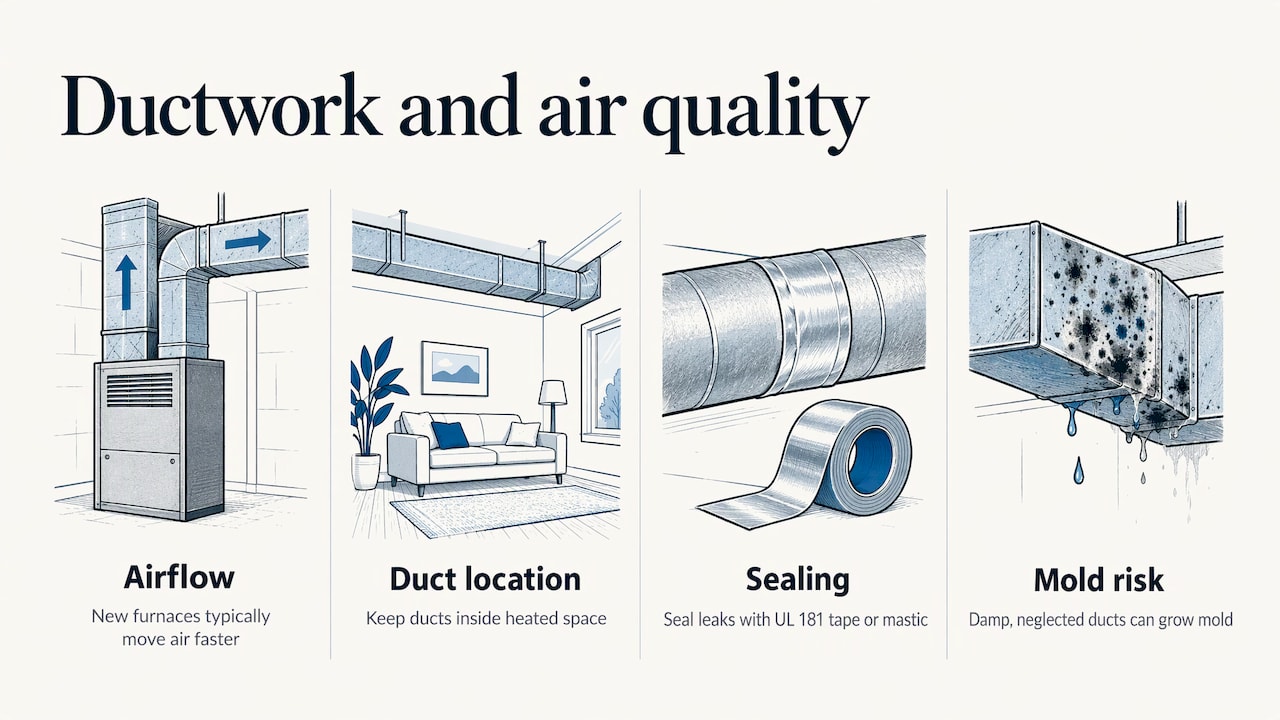
The furnace only heats the house as well as the ducts deliver. Minnesota’s guide points out that new high-efficiency furnaces typically move air faster than older units, so ducts must be sized correctly to protect efficiency, reduce strain on the blower motor and keep rooms comfortable. Michigan State’s guidance adds that ducts should sit inside heated space and be sealed at every joint.
The DOE checklist asks the contractor to inspect and repair all exposed ducts and seal visible leaks with UL 181 tape or mastic, a sealant paste. Humid climates add another concern. Damp, neglected ducts can grow mold, and this overview of mold in HVAC systems and the first 24 to 72 hours of response is worth reading before you commit to connecting a new unit to old ducts.
In Southwest Florida, ducts work hard in both seasons. If yours show leaks, damage or buildup, we cover ductwork repair in Sarasota County and air duct cleaning. Adding air purifier installation at the same visit lets one crew handle the whole air path.
Installation day: what you should see
Knowing what a careful crew does helps you recognize a rushed one.
Before they start
The crew should confirm the equipment matches the signed estimate and walk the work area with you. Clear a path from the front door to the furnace and move stored items away from it.
During removal
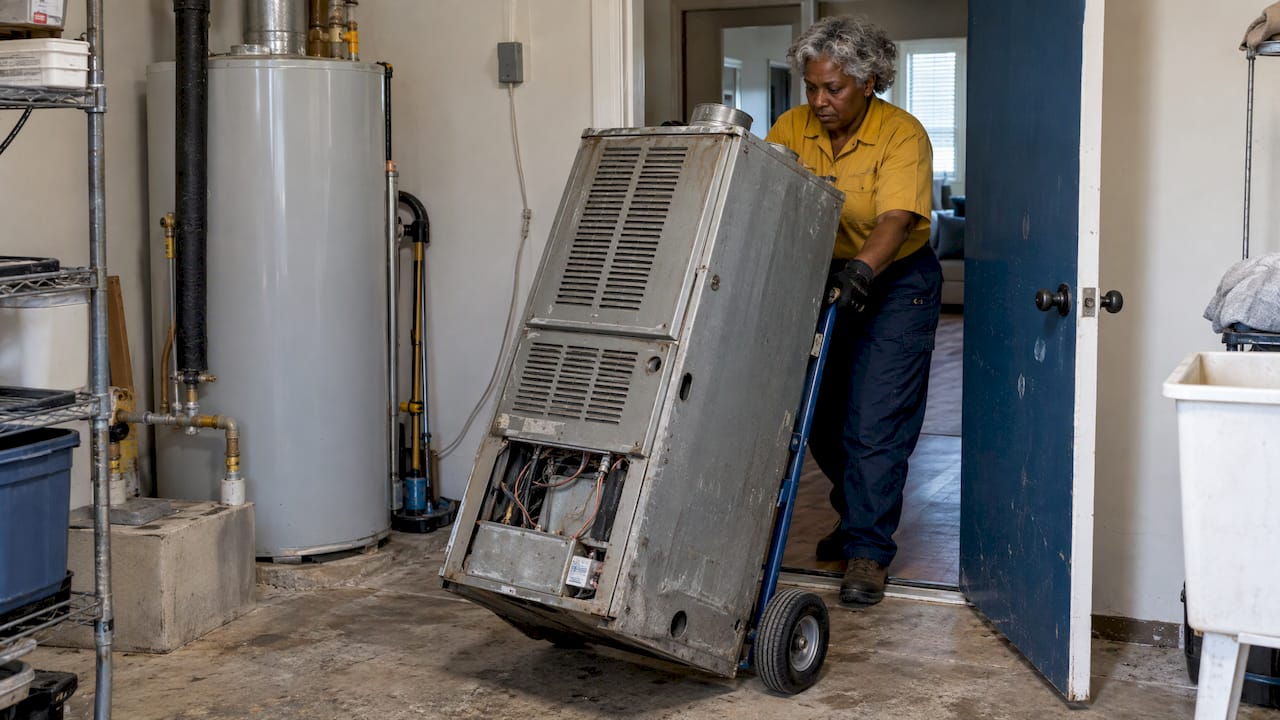
The old furnace is disconnected after power and gas are off. The Illinois guide advises checking whether old insulation around the previous system contains asbestos before removal, and verifying that the contractor is bonded and insured. Hauling the old unit away should be part of the job. If you are curious how disposal works, this explanation of the appliance removal process shows what happens to the old equipment.
The DOE checklist adds a safety point many homeowners never hear. If a new direct-vent furnace leaves a gas water heater alone on an old chimney, the chimney may no longer draw properly. The contractor should tell you and seal the vacated chimney opening.
Startup and commissioning
This is the stage that separates careful installers from fast ones. Commissioning means measuring that the system performs as designed: airflow, temperature rise, gas pressure, combustion and vent performance, and carbon monoxide levels. Illinois advises that furnaces be tuned with a combustion efficiency test after installation. Ask to see the readings.
Before they leave
You should get a walkthrough of the thermostat, a filter size and replacement schedule, a written warranty, and registration details for the manufacturer’s coverage. Test a carbon monoxide alarm near the sleeping areas if you have one, and ask the installer to confirm where it should be placed if you do not.
What furnace installation costs
Published ranges are wide because the job varies so much. The Illinois Keep Warm guide says a new heating system costs anywhere from $2,000 to more than $4,500. This Old House reports a much broader span of $2,000 to $30,000 for installation. Both recommend written estimates from at least three contractors.
What moves the number:
- Equipment tier: single-stage, two-stage or modulating, and the efficiency rating.
- Size and fuel: set by your load calculation.
- Ducts: repair, sealing, resizing or replacement.
- Venting and gas work: especially when the unit moves or the fuel changes.
- Access: tight attics and closets take longer.
- Permits and code requirements: set by your local building department.
We do not publish a fixed price for installation work, because the right number depends on your home. What we do is give you a transparent written estimate after a thorough diagnostic, so the scope and the price match.
The “$5,000 rule”
People searching this usually mean a rule of thumb for repair versus replacement: multiply the age of the equipment by the repair cost, and if the result passes $5,000, replace. It is a rough guide, not a standard, and it ignores efficiency, safety and parts availability. A diagnostic that tells you what is actually wrong gives you a better basis for the decision.
Rules and licensing in Florida
Furnace work involves gas, combustion and venting, which is why it is regulated. Florida’s Chapter 489 defines the contractor classes for air-conditioning and heating work, and installations are normally permitted through your city or county building department. Permits and inspections protect you. An unpermitted heating system can cause trouble when you sell the home or file an insurance claim.
Florida does allow owners to pull their own permits for their own homes under limited conditions. In that case the owner becomes responsible for the work. Under Florida’s owner-builder statute, an owner who then hires a contractor must verify the contractor’s license and workers’ compensation coverage. For gas appliances, that responsibility is a good reason to hire a licensed installer who handles the permit from the start.
Federal efficiency rules are also changing. The DOE says amended standards for non-weatherized gas and mobile-home gas furnaces took effect on February 16, 2024, with compliance required on and after December 18, 2028. The equipment you are quoted should already meet the standard that applies when it is installed. Ask your installer to confirm.
How to choose the installer
Use the evidence above as a bid checklist:
- Load calculation in writing. Manual J, not square footage.
- Itemized scope. Equipment model, ducts, venting, permit, removal and disposal.
- Commissioning. Measured airflow, temperature rise and combustion readings.
- License, insurance and bonding. Verify them before you sign.
- Warranty terms. Manufacturer coverage plus the installer’s own labor warranty.
- Three written bids. Compare scope, not only price.
Our approach is built around this order: thorough diagnostics before any sales pitch, accurate written estimates, and a one-year labor warranty on our work. Veterans and active military also qualify for discounts.
Our perspective
Most installation problems begin in the estimate. A bid built on the old unit’s size and a quick look at the closet does not describe your house, and the system that follows is only as good as that first number.
We are a veteran-owned company in Sarasota, and we treat the diagnostic as the job’s foundation. In a humid climate, comfort depends on how the equipment, the ducts and the air quality are matched to your particular home. We want you to understand the scope before you sign, which is why estimates are written and prices transparent.
A one-year labor warranty and a satisfaction guarantee stand behind our work because installation quality shows over time. If you are weighing a heating project, bring us the bids you have. We will walk through what a complete scope should cover.
Zach
Next step for Sarasota and Manatee homes
If your heating or cooling system is failing, our team serves Sarasota and Manatee Counties, including Lakewood Ranch, Venice and Longboat Key. We offer same-day and emergency repair, installation sized for Florida humidity, and maintenance programs, all with thorough diagnostics and written estimates.
If the system needs replacing, start with our AC installation page. For a system that is not working right now, emergency repair is available around the clock. Not sure whether it needs repair at all? Our guide to a heater that won’t turn on lists what to check before you call.
FAQ
How long does a furnace installation take?
A simple replacement, where a similar furnace goes in the same spot with ducts and gas lines in good condition, is typically a one-day job. Moving the unit, changing fuel types, repairing ducts or working in tight spaces adds time. Your written estimate should state the expected schedule.
Can I install a furnace myself?
We do not recommend it. Furnace work involves gas lines, venting and combustion testing, and Florida regulates air-conditioning and heating contracting through Chapter 489. An owner who pulls their own permit takes on responsibility for the work. A licensed installer who handles permits and testing is the safer route.
Is a bigger furnace better?
No. Oversized furnaces cycle on and off too often, which wastes energy and stresses components. Undersized ones run constantly and wear out sooner. The right size comes from a Manual J load calculation of your home, not from the old unit’s label.
What should a furnace installation quote include?
It should list the equipment model and efficiency rating, the heat load calculation, duct repairs or modifications, venting and gas work, permits, removal of the old unit, startup testing and warranty terms. Get it in writing and compare at least three.
Sources
- DOE Home Improvement Expert Fact Sheet and Checklist: Gas Furnace Replacement
- Minnesota Furnace Replacement guide
- Illinois Keep Warm Heating Systems guide
- Michigan State University Extension, Choosing the Right Furnace
- Consumer Reports gas furnace buying guide
- CenterPoint Energy furnace buying guide
- This Old House, Furnace Installation
- U.S. Department of Energy, Consumer Furnaces
- Florida Statutes, Section 489.105
- Florida Statutes, Section 489.103
- Mold in HVAC systems: 24 to 72 hour actions
- Appliance removal process explained