
When your heat stops working, start with the cheapest fixes: the thermostat, the power, the filter and the vents. If those checks don’t bring warm air back, or you smell gas or hear a carbon monoxide alarm, stop and get help. Most no-heat calls come down to a short list of causes, and you can rule out several of them in about ten minutes without opening a single panel.
In Sarasota and Manatee Counties the cold snaps are short, so the heat often sits unused for months. Then the first cool morning arrives and the system won’t start. This guide walks you through the checks in order, explains what each result means and tells you where the safe do-it-yourself part ends.
Key Takeaways
- Check the thermostat first: it needs power, must be set to Heat, and must be set above the current room temperature.
- A dirty filter, a tripped breaker or a switch left off causes many sudden shutdowns, and all three are quick to check.
- Cold air from the vents often means the fan is set to On instead of Auto, but it can also point to a flame sensor, fuel or gas valve problem.
- Gas smell or a carbon monoxide alarm means leave the house and call emergency or utility services. Don’t troubleshoot.
- If the basic checks fail, stop and call a professional. Repeated breaker trips are a sign of a bigger problem.
Table of Contents
- Start with the thermostat
- Check the power: switch, breaker and fuel
- Replace or inspect the air filter
- Open the vents and clear the grilles
- Heat is on but the air is cold
- What counts as normal for a heat pump
- Cooling works but heating doesn’t
- How to reset the system safely
- When to stop and call a professional
- What to tell the technician
- Get your heat back with AC Heroes
- FAQ
- Sources
Start with the thermostat
The thermostat is the most common culprit and the easiest to check. Carrier’s furnace guidance starts here: confirm the thermostat has power, is set to Heat and is set above the current room temperature before you look at anything else.
Work through it in this order:
- Look at the display. A blank screen usually means dead batteries or no power to the thermostat. Trane notes that dead thermostat batteries can prevent the system from operating. Replace them with fresh ones.
- Set the mode to Heat. After a summer on Cool, it is easy to forget to switch it.
- Raise the setpoint. Set it several degrees above the room temperature so the system has a clear reason to start.
- Wait a few minutes. Many systems have a startup delay. Give it time before deciding nothing is happening.
If you have a smart thermostat, check that it hasn’t lost its Wi-Fi schedule or switched to an away mode. A schedule can quietly lower the setpoint below the room temperature, and it looks exactly like a failed heater.
If the display is on, the mode and setpoint are right, and nothing starts after several minutes, move on to power. If you want a second walkthrough for a unit that does nothing at all, our guide on what to check when a heater won’t turn on covers that case in more detail.
Check the power: switch, breaker and fuel
A heating system needs electricity even when it burns gas, because the blower, the control board and the ignition all run on power. Trane lists a shutoff fuel source, a tripped breaker or an incorrectly set thermostat among the basic reasons a heating system fails to run.
The furnace switch
Most indoor units have a switch that looks like an ordinary light switch, often on or near the unit. It gets flipped off during maintenance or by accident. Make sure it is on.
The breaker
Open your electrical panel and look for a breaker in the tripped or middle position, labeled for the furnace, air handler or HVAC. Carrier points to a tripped breaker after a power surge as one cause of a sudden stoppage. Switch it fully off, then back on once.
If it trips again soon, don’t keep resetting it. Liberty Mutual warns that a breaker reset may be only a temporary fix, and that a unit that trips again quickly could indicate a bigger problem. Repeated trips are a job for a technician, not another try.
The fuel supply
If you have a gas furnace, check whether other gas appliances, such as the stove or water heater, are working. Carrier lists checking whether other gas appliances operate among the homeowner checks. If they are also dead, the problem may be the gas supply and not your furnace. Problems at the gas valve or supply line need a professional, not a home fix.
Replace or inspect the air filter
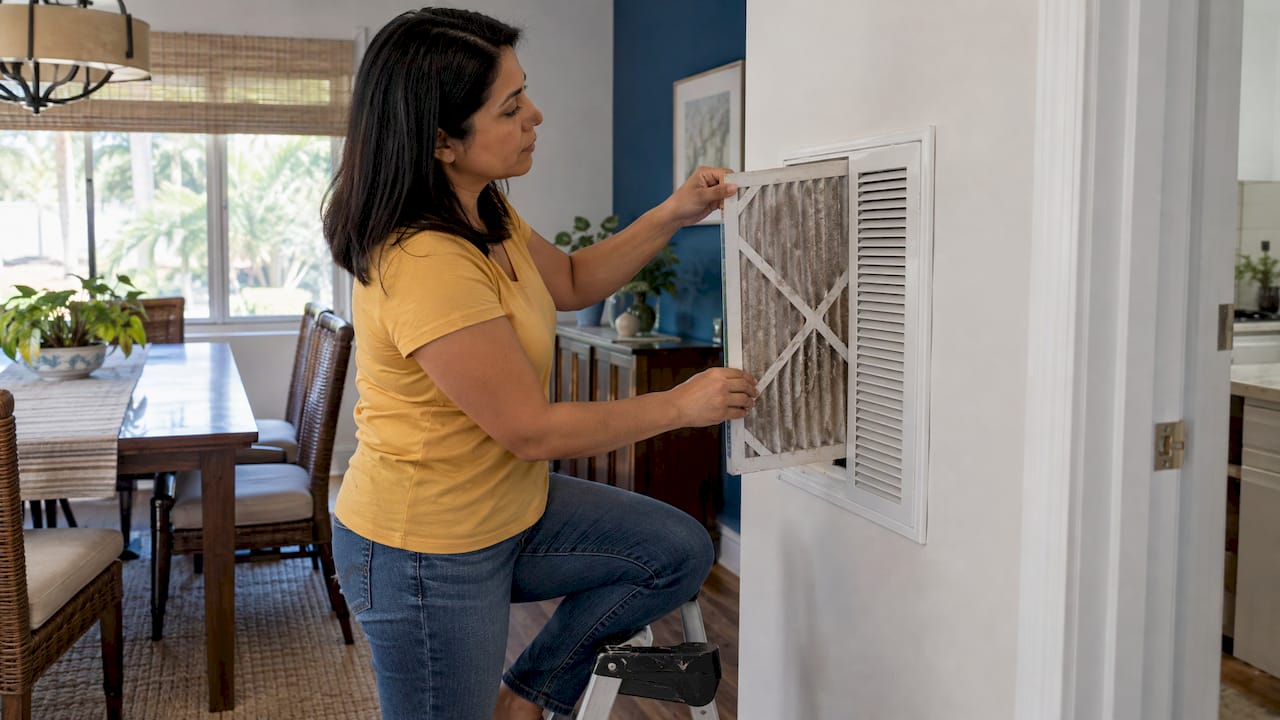
A clogged filter is one of the most common reasons a heating system quits, and it is also one of the easiest to fix. Carrier explains that a clogged filter can restrict airflow, overheat the furnace and trigger an automatic shutdown. The safety limit is doing its job. The system turns itself off to protect the heat exchanger.
Here is how to check it safely:
- Turn off power to the furnace at the switch first. Liberty Mutual recommends turning off furnace power before replacing a filter.
- Slide out the filter and hold it up to a light. If you can barely see light through it, replace it.
- Install the new one with the airflow arrow pointing toward the unit, not away from it.
- Restore power and run the system.
Liberty Mutual says filters commonly need replacing every one to three months, subject to your furnace manual. In Florida, where the air conditioner runs most of the year on the same filter slot, a filter that has been loaded all summer is very likely to be due by the first cold morning.
Open the vents and clear the grilles
Airflow problems feel like heating problems. Carrier’s homeowner checks include opening supply vents and clearing return grilles. Walk the house and check that:
- Supply vents are open and not covered by furniture, rugs or curtains.
- Return grilles are not blocked by boxes, laundry or pet beds.
- Nothing has been pushed against the return in a closet or hallway.
Restricted airflow does the same damage as a dirty filter: the unit overheats and shuts itself down. If the unit has an outdoor intake or exhaust pipe, take a look at that too. Liberty Mutual notes that blocked outdoor intake or exhaust pipes can stop a furnace. Leaves, debris or a nest can be enough. Clear what you can reach from the ground, and leave anything inside the pipe or on a roof to a professional.
Heat is on but the air is cold
If the system runs but the vents blow cool air, the blower is usually running without active heat. Carrier says the most common cause is the thermostat fan set to On instead of Auto. On keeps the blower going between heating cycles and circulates room-temperature air. Switch the fan to Auto and see if the air warms up within a few minutes.
If the fan is already on Auto, the same guide lists other causes:
| Possible cause | What you may notice | Who handles it |
|---|---|---|
| Fan set to On | Cool air between heating cycles | You, at the thermostat |
| Dirty filter causing overheating | Short warm bursts, then shutdown | You, then a pro if it repeats |
| Pilot or flame sensor problem | Unit starts, then stops, no sustained heat | Professional |
| Fuel supply or gas valve issue | No flame at all | Professional |
Carrier’s guidance is that cold air that lasts beyond normal startup needs a professional diagnosis. Don’t open the burner area or clean a flame sensor unless you are trained to do so.
What counts as normal for a heat pump
Many homes here are heated by a heat pump, not a gas furnace. Your system may also use electric heat strips. Check your equipment label or paperwork if you’re not sure which you have, because the answers differ.
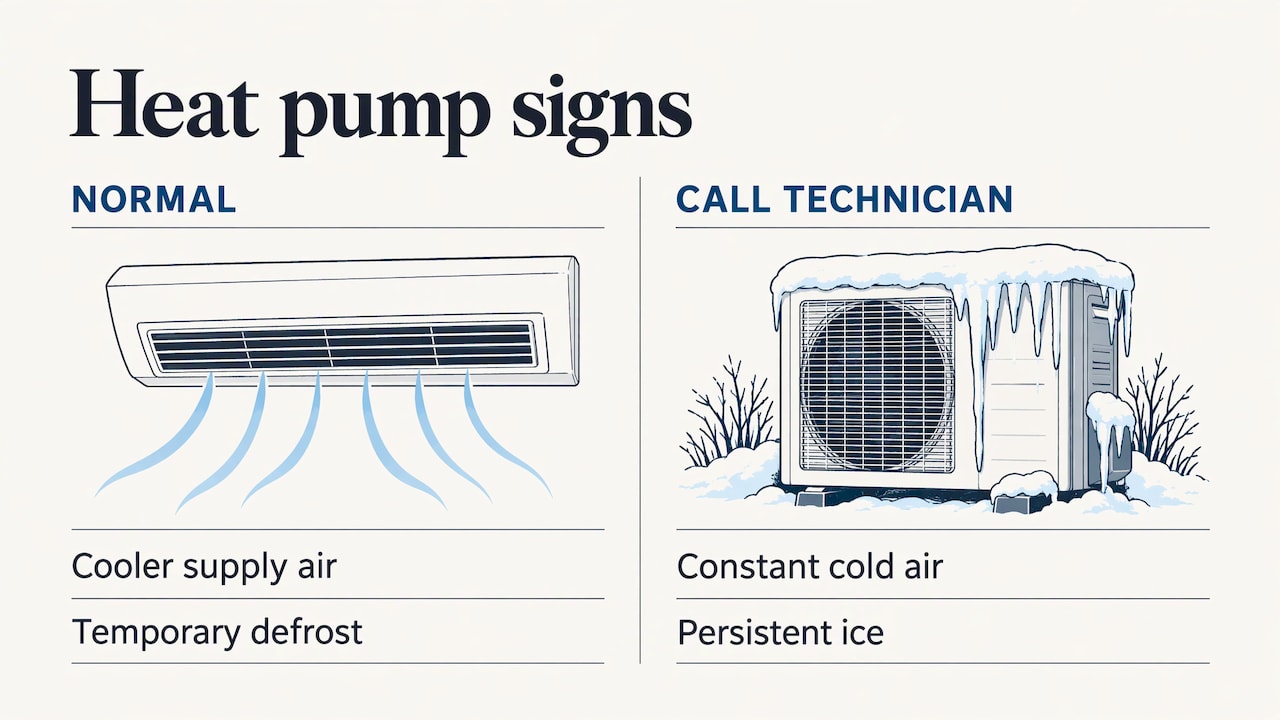
Carrier explains that heat pumps work differently from gas furnaces: air that feels cooler and temporary defrost operation can be normal. A heat pump moves heat and doesn’t burn fuel, so its supply air is not as hot as the air from a furnace. What isn’t normal is constant cold air or ice that persists. Those point to a fault, and you should call a technician instead of chipping at the ice.
Cooling works but heating doesn’t
This is common in Florida, because the cooling side runs for most of the year and the heating side sits idle. Honeywell identifies thermostat configuration, wiring, airflow or heating-system faults as possible reasons that cooling can work while heating does not.
A useful sequence is:
- Confirm the thermostat is set to Heat and not Auto changeover with a cooling setpoint that is too low.
- Check the filter and vents, since airflow affects both modes.
- If the thermostat controls look right and there’s still no heat, the issue is likely in the heating components or wiring, which is the point to call.
The reverse problem is covered in our guide to an AC blowing hot air, which uses a similar check-first approach.
How to reset the system safely
A reset can clear a frozen thermostat or control glitch. Trane’s method: make the system idle, then reboot the thermostat from its menu if it has that option. If it is unresponsive, turn off the thermostat or HVAC breaker for 20 to 30 seconds, turn it back on and allow several minutes for the system to start up.
Do this once. If the system stops again, the reset didn’t solve a cause, it only delayed it. Don’t repeatedly cycle the breaker, and don’t bypass a safety switch to force the unit to run.
When to stop and call a professional
Some signs mean you should stop troubleshooting immediately.
- You smell gas. Carrier says that if you smell natural gas, don’t operate switches or try to relight the furnace. Leave the house and call emergency or your gas utility’s emergency line from a safe location.
- A carbon monoxide alarm sounds. Evacuate, then contact emergency services from outside.
- You hear unusual noises or smell burning. Carrier advises calling a qualified professional if you notice unusual noises or burning or gas odors. Our guides on loud noises from your system and burning smells explain what each one can mean.
- The basic checks didn’t work. Thermostat, power, filter and vents are all fine and there is still no heat.
- The breaker keeps tripping.
- The unit relights and then shuts down again.
The same Carrier page also tells owners of older gas furnaces that they may check whether the pilot light is lit, but only by following the owner’s manual. If you aren’t certain how to do that, skip it.
What to tell the technician
A good call saves diagnostic time. Before you phone, write down:
- The type of equipment: gas furnace, heat pump or electric.
- The symptoms: no start, short cycling, cold air, noise, smell.
- Any error codes or blinking lights on the unit or thermostat.
- What you have already checked: filter, breaker, thermostat batteries, vents.
Burlington County HVAC makes the same point in its no-heat guide: giving the contractor equipment type, symptoms, codes and checks already attempted can save time on diagnosis. Note also the age of the system if you know it.
What we see at AC Heroes
Most heating calls in our area are not dramatic. They are a system that sat idle for months and then got asked to work on the first cold night. People call us expecting a big bill, and what they need first is a proper diagnosis.
That’s how we work. We find the actual cause before we talk about parts or replacement, and we put the estimate in writing so you know what you are paying for. We are a veteran-owned company based in Sarasota, and we’d rather earn your trust on a small repair than push a big one you don’t need.
Our advice is simple. Do the safe checks in this guide, and when they don’t work, call early. A system that keeps tripping or shutting down is protecting itself, and running it again and again can make a small fault larger. A regular tune-up before the cool season is the easiest way to avoid a cold-morning surprise.
Zach
Get your heat back with AC Heroes
If you’ve run the checks and the house is still cold, we can take it from here. Our technicians diagnose the problem first, give you a transparent written estimate, and back our work with a one-year labor warranty. We serve homes across Sarasota and Manatee Counties, including Lakewood Ranch, Venice and Longboat Key, and offer military and veteran discounts.
Start with our heating system repair page, or call for emergency service if the situation can’t wait. To avoid the next surprise, look at our preventative maintenance options, which include annual and semi-annual programs.
FAQ
Why would my heat suddenly stop working?
Carrier says a sudden stop can come from an overheating safety limit, often caused by a dirty filter, or from a dirty flame sensor, a tripped breaker after a power surge, or an interrupted gas supply. Check the thermostat, filter and breaker first. Gas supply or gas valve problems need a professional inspection.
Why is my air conditioning working but not my heat?
The cooling and heating sides share the thermostat and airflow, but they use different components. Thermostat settings, wiring, airflow or a heating-system fault can leave one side working. Check the mode, setpoint and filter, then call a technician if there’s still no warm air.
Why is my heater on but blowing cold air?
The most common cause is the thermostat fan being set to On instead of Auto. If switching to Auto doesn’t help, the cause may be a dirty filter, a flame sensor problem or a fuel supply issue. On a heat pump, brief cool-feeling air during defrost can be normal, but constant cold air is not.
How do I reset my heating system?
Put the system in idle, then reboot the thermostat from its menu. If it’s unresponsive, switch the HVAC breaker off for 20 to 30 seconds, turn it on and wait several minutes. Reset it once only. If the problem comes back, call a professional.
What should I do if I smell gas when the heat isn’t working?
Don’t touch switches or try to relight anything. Leave the house immediately and call emergency services or your gas utility from a safe place. Don’t go back in until you’ve been told it is safe.
Sources
- Carrier: Furnace Troubleshooting Guide
- Carrier: Furnace Not Turning On
- Carrier: Why Is My Furnace Blowing Cold Air?
- Carrier: Heat Pump Not Heating?
- Trane: HVAC Troubleshooting
- Trane: How Do You Reset a Thermostat
- Honeywell Home: Why is my Heating not Working?
- Liberty Mutual: Suddenly your heat is out? Here’s the plan
- Burlington County HVAC: No Heat? What to Check First