
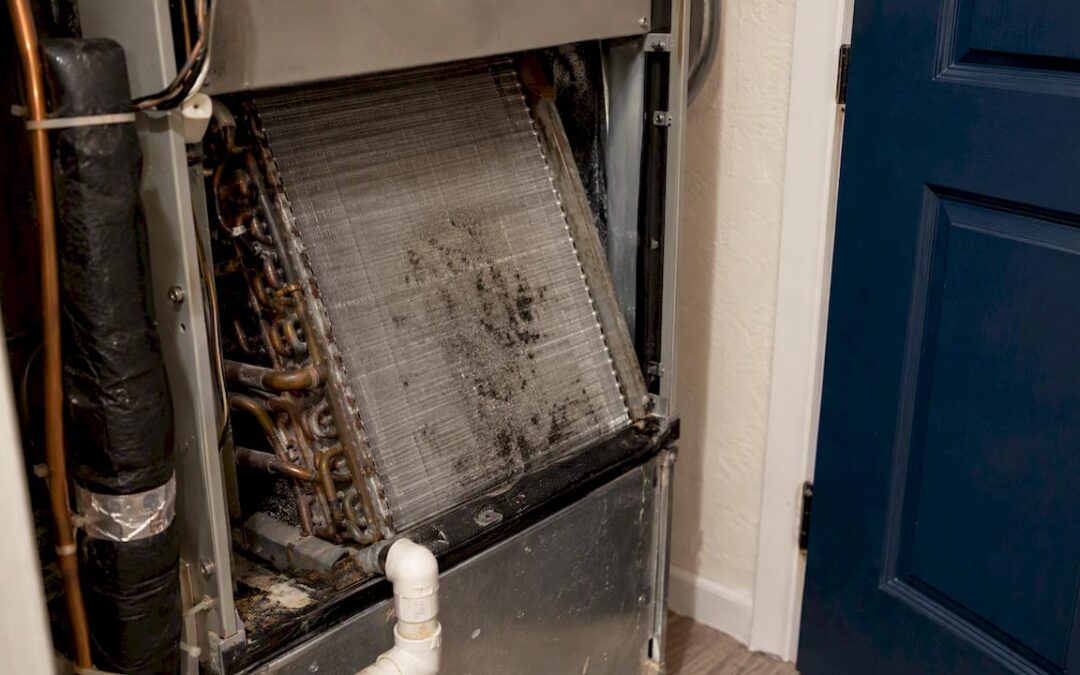
Mold in an HVAC system almost always comes down to one thing: moisture that stays where it should not. If you smell mustiness when the AC kicks on, or you see dark growth on a vent, coil or duct, the right move is to find the water source, have the system inspected, and clean or replace whatever is affected. Cleaning alone will not hold if the moisture stays. Here is how to tell what you are dealing with, what you can safely do yourself and when to call a technician.
Key Takeaways
- Mold in an HVAC system needs moisture. The usual sources are condensation on the cooling coil, a clogged condensate drain, leaking or uninsulated ducts and high indoor humidity.
- A musty odor from the vents and visible growth on system components are the clearest warning signs.
- Wet or moldy insulation cannot be cleaned effectively. It has to be removed and replaced.
- Cleaning without fixing the moisture problem means the mold returns.
- In Sarasota and Manatee Counties, where the AC runs most of the year, a yearly inspection of the coil, drain pan and ducts is the cheapest protection you have.
Table of Contents
- Is mold in an HVAC system common?
- Where mold hides in the system
- Signs of mold in your HVAC system or air ducts
- Why Florida homes are especially prone
- What to do first if you suspect mold
- Can you clean mold in HVAC yourself?
- When you need a professional
- Our perspective: diagnose first, then decide
- How to keep mold from coming back
- Get your system checked by AC Heroes
- FAQ
- Sources
Is mold in an HVAC system common?
More common than most homeowners expect. The CDC says there is always some mold around, and it can enter homes through vents and heating and air conditioning systems. Spores in the air are normal. A problem begins when they land somewhere damp and stay there.
An air conditioner is built to create moisture. Warm, humid air crosses a cold coil, water condenses, and that water is supposed to drain away. When any part of that chain fails, you get the damp, dark, dust-fed conditions mold likes. That is why the EPA calls cooling coils a major source of moisture contamination in HVAC systems and tells homeowners to make sure the condensate pan drains properly.
Not every musty smell means the whole duct system is colonized. Often the growth is local: a drain pan, a section of coil, a vent boot that sweats, or the insulation around a leaking duct. Finding the exact spot is the first job.
Where mold hides in the system
Most of an HVAC system is out of sight, which is why growth can go unnoticed for a long time. These are the places we check first.
The evaporator coil and drain pan
The indoor coil is cold and wet whenever the system is cooling. Dust that gets past a tired filter sticks to it and feeds growth. The condensate pan underneath should drain freely. If the line is clogged, water sits, and a pan with standing water becomes a mold source within days in warm weather. The U.S. Department of Energy’s guidance on moisture says to keep drip pans clean and make sure drain lines flow properly.
Supply ducts and vent boots
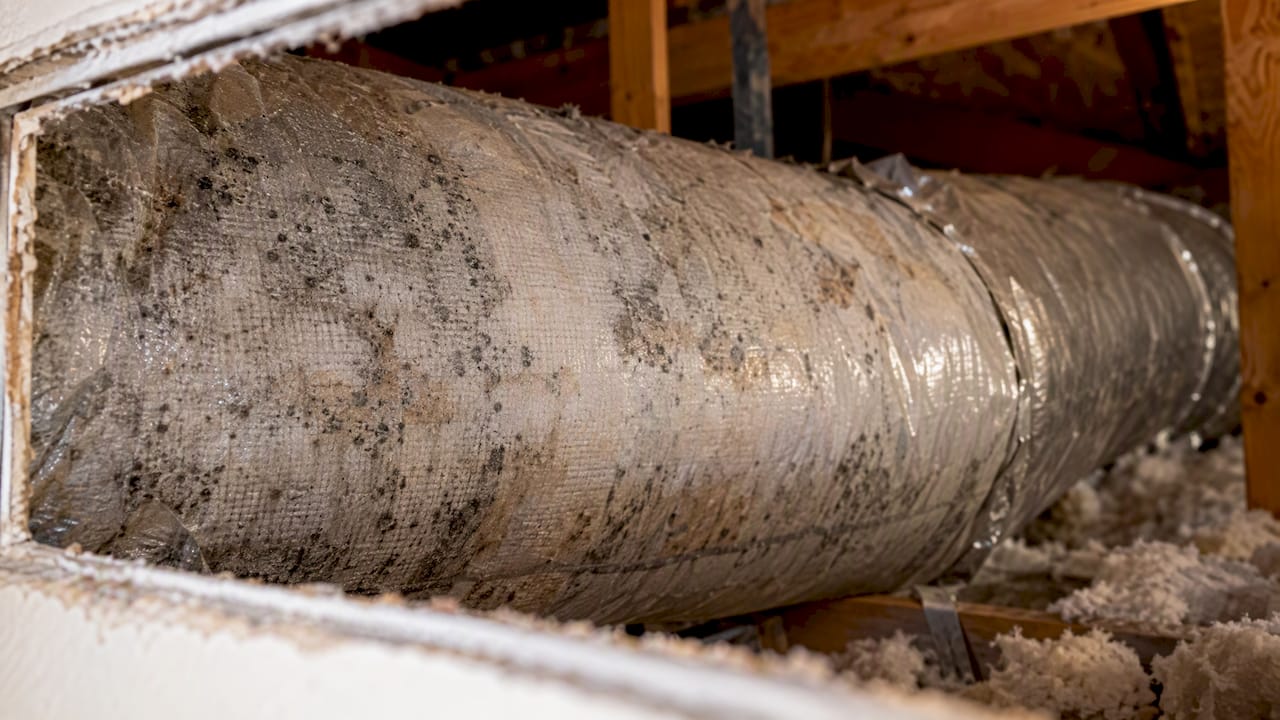
Condensation can form inside supply ducts too. Building Science Corporation notes that moist air meeting cold duct surfaces produces condensation, especially toward the end of a cooling cycle. Their researchers describe it as a matter of surface temperature falling below the dew point of the surrounding air. Ducts running through a hot, humid attic with weak insulation or loose seams are the classic setup. You often see the result at the register: dark spotting on the grille, or on the ceiling around it. We cover that case in detail in our guide to mold around air vents.
Duct insulation and liner
Insulated flex duct and duct liner hold moisture once they get wet. The EPA is blunt about it: wet or moldy insulation cannot be effectively cleaned and should be removed and replaced. That is the point where a cleaning job turns into a repair or replacement job.
The air handler cabinet and return side
Leaks in return ducts pull humid attic or crawlspace air into the system. Dirty filters and a dusty blower compartment add food for mold. Trane lists dirty filters and duct leaks among the conditions that let mold spread, along with condensation, leaks and poor drainage.
Signs of mold in your HVAC system or air ducts
You rarely see mold inside a duct, so the signs are indirect. The EPA lists two main ones: visible mold on HVAC components and musty odors from the vents. In practice, here is what homeowners in our area report:
- A musty or earthy smell when the system starts, that fades or returns with the cooling cycle.
- Dark spots or fuzzy growth on registers, grilles, the ceiling near a vent or the drain pan you can see at the air handler.
- Water stains or drips around the air handler, in the closet, or under attic ducts.
- Sweating ducts or vent covers in humid weather.
- A system that runs constantly and still leaves the house feeling clammy, which points to a humidity problem that feeds mold.
- Dust that returns quickly after cleaning, which can signal leaky ducts moving unfiltered air.
One caution. Dark residue near a vent is not always mold. Dust and soot can look similar. The EPA says an expert can determine whether a substance is mold, sometimes with laboratory analysis. Do not assume either way.
What about health symptoms?
Mold can bother some people more than others. If someone in your home has asthma, allergies, a weakened immune system or breathing trouble that seems tied to being indoors, talk to their doctor and tell them about the possible mold. We are HVAC technicians, not physicians, and we will not tell you a symptom is caused by mold. What we can do is find and fix the moisture source in your system so that it is one less thing to worry about.
On testing: the CDC does not recommend routine mold testing, because health effects vary from person to person and there are no set standards for an acceptable amount of mold in a home. If you can see it or smell it, treat it as a problem to fix rather than a number to measure.
Why Florida homes are especially prone
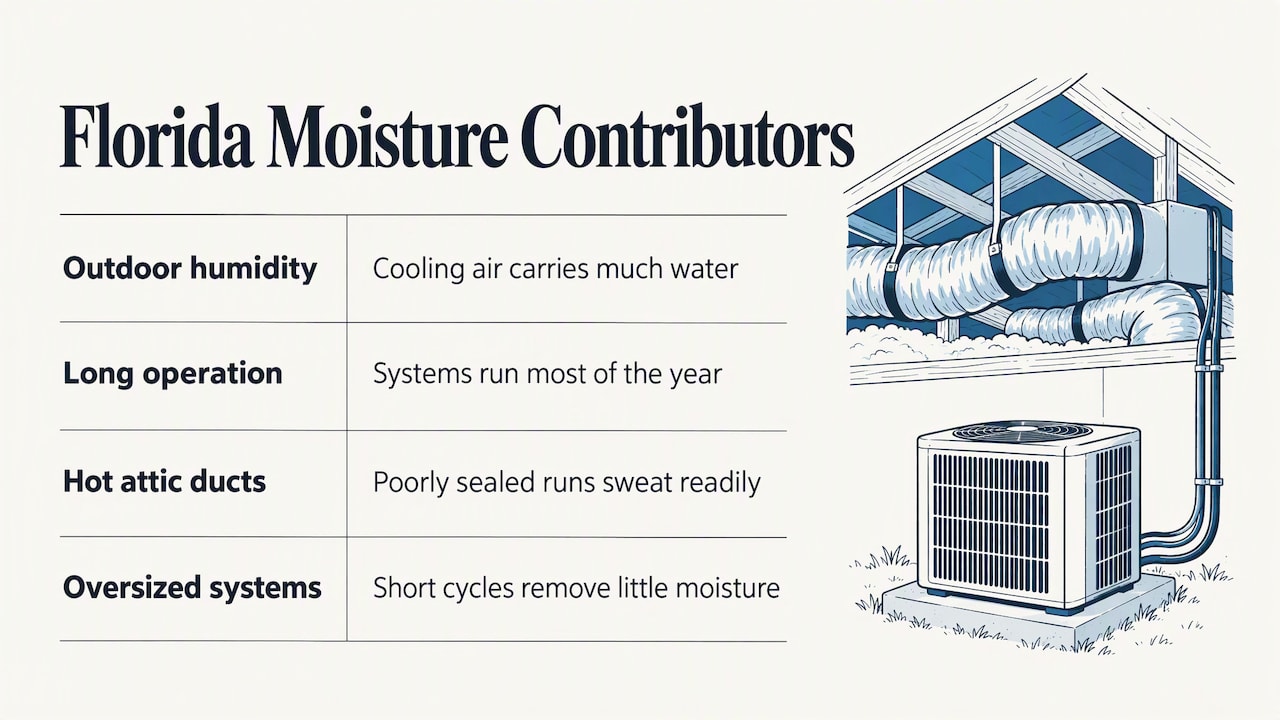
High outdoor humidity means the air your system cools carries a lot of water. Our systems run for most of the year, so coils stay wet for long stretches, drain lines see constant use, and any lapse (a missed filter change, a clogged line) has time to turn into growth. Homes in Sarasota, Bradenton, Lakewood Ranch, Venice and Longboat Key also tend to have ducts in hot attics, where a poorly sealed or under-insulated run sweats readily.
Oversized systems add to the problem. An air conditioner that is too large for the house cools the air quickly, shuts off, and never runs long enough to pull much moisture out. The house feels cool but damp. This is a main reason we size installations for Florida humidity rather than just square footage.
The CDC advises keeping indoor humidity no higher than 50% all day. A cheap hygrometer from a hardware store will tell you where your home stands.
What to do first if you suspect mold
- Look at what you can reach safely. Check the condensate drain pan and line near the air handler, registers, grilles and the ceiling around them. Do not open ductwork or pull apart equipment.
- Change the filter. A clogged filter is a cheap, quick fix and one of the contributors to the problem.
- Check for standing water or drips at the air handler and the drain line outlet.
- Check humidity. If the reading stays above 50%, note it and mention it to your technician.
- Turn the system off if you see heavy growth or active leaking. Running it can push spores and moisture through the house. Call us if you lose cooling and need it fast: we handle emergency AC repair around the clock.
- Get a proper inspection. A technician can reach the coil, pan and accessible duct sections, and tell you whether you have a surface issue or something deeper.
The CDC’s general rule for mold is simple: clean it and fix the moisture problem. You do not need to identify the type of mold first. That guidance covers hard household surfaces, and HVAC components are a different job from wiping a bathroom tile.
Can you clean mold in HVAC yourself?
You can wipe visible growth off a register or grille you can remove and reach, and you can clear a clogged drain line opening if you know how. That is about where DIY should stop. Evaporator coils are delicate, ducts are mostly hidden, and disturbing mold in a duct can spread it through the house.
One safety point matters more than any other. The CDC warns never to mix bleach with ammonia or other household cleaners, because the mixture produces poisonous gas. In a closet air handler or a small room, that risk is real. Do not spray bleach or other cleaners into the HVAC system either: it is not designed for it and the problem underneath, moisture, is still there.
When you need a professional
Call in a pro when any of these apply:
- Mold is on the coil, in the air handler cabinet or inside the ducts.
- The insulation or liner is wet, stained or visibly moldy.
- The musty smell persists after a filter change and a drain check.
- Water keeps showing up around the unit.
- Someone in the home has respiratory problems and you want the system checked.
What professional work looks like depends on what the inspection finds:
| Finding | Typical fix |
|---|---|
| Clogged condensate line, dirty pan | Clear the drain, clean the pan, check the float switch |
| Growth on the coil | Clean the coil and address the airflow or filtration cause |
| Light surface growth on hard duct surfaces | Professional cleaning plus a moisture fix |
| Wet or moldy duct insulation or liner | Remove and replace the affected section or duct |
| Sweating ducts in the attic | Seal leaks, add or replace insulation |
| High house humidity | Right-size equipment, adjust fan settings, consider dehumidification |
A word on duct cleaning. The EPA does not recommend routine duct cleaning, but it does say to consider it when there is substantial visible mold on hard-surface ducts or other components. That matches how we work: we clean when there is a reason to, not as a default upsell. If you want to understand when cleaning makes sense, see our pages on air duct cleaning and why professional duct cleaning matters in Sarasota and Bradenton.
Our perspective: diagnose first, then decide
Mold is a topic where homeowners get frightened, and some companies lean on that fear. We have seen the quotes: full duct replacement for a drain pan problem, or a package of add-ons for a smell that was a clogged line.
Our approach is the reverse. We find the moisture first. In our experience in Sarasota and Manatee Counties, most musty-smell calls trace back to a handful of causes: a drain that has backed up, a filter that has been left too long, a leaking or under-insulated duct in the attic, or a system that does not run long enough to dry the air. Those are fixable, and the fix is usually much smaller than people fear.
When the problem is bigger, such as saturated insulation or ducts that have failed, we say so and show you why, in a written estimate. The EPA says mold will recur if the conditions that caused it are not corrected, and we treat that as the rule of the job. Cleaning a surface without correcting the cause is paying twice.
If you are a veteran or on active duty, ask us about our military and veteran discounts. We are veteran-owned, and we back our work with a one-year labor warranty.
— Zach
How to keep mold from coming back
Prevention is mostly routine. The EPA’s list is short: change filters regularly, keep drain pans clean and draining, seal and insulate ducts, and repair leaks or water damage promptly. Here is how that works in a Florida home.
- Filters: Check monthly during the cooling season. Replace when dirty, not by the calendar.
- Drain line: Have it flushed at maintenance visits. Slow drainage and a gurgling sound are early warnings.
- Ducts: Have attic runs inspected for loose connections, torn insulation and sweating. If you find a damp spot, repair the leak and dry the area before anything else.
- Humidity: Aim for 50% or lower. Running the fan on “on” instead of “auto” can re-evaporate water from the coil in humid climates, so ask your technician what suits your system.
- Fresh air: Building Science Corporation warns that bringing ventilation air directly into central supply ducts in humid conditions risks condensation and mold, and recommends mixing outside air with at least three parts inside air upstream of the filter. If you have a ventilation add-on, confirm how it is ducted.
- Other moisture in the house: Fix roof leaks, plumbing drips and damp walls. If you want a general primer, this piece on how to reduce dampness in a room covers the basics of finding the source.
The easiest way to keep all of this on schedule is a maintenance plan. Our preventative AC maintenance program includes annual and semi-annual options, so the coil, pan, drain line and airflow get checked before they turn into a repair.
Get your system checked by AC Heroes
If you smell mustiness, see growth or just want to know what is happening inside your system, we can inspect it. We start with a thorough diagnostic, tell you what we find, and give you a written estimate before work begins. No scare quotes, no pressure to buy parts you do not need. We serve Sarasota and Manatee Counties, including Lakewood Ranch, Venice and Longboat Key.

For a leak, a clogged drain or a system that has stopped cooling, start with AC repair. If your ducts need work, see our ductwork services. For anything else, reach us through ac-heroes.com.
FAQ
Is it common to have mold in AC ducts?
It happens often enough in humid climates that you should know the signs. Mold spores are always present in the air, and they enter through vents and HVAC systems. Growth only takes hold where there is lasting moisture, so a well-drained, well-sealed, well-maintained system is far less likely to have a problem.
Should I have my ducts cleaned if I smell mold?
Not automatically. The smell can come from the drain pan, coil or a damp section of ductwork rather than the whole duct system. The EPA says to consider cleaning when there is substantial visible mold on hard-surface ducts or components. Get an inspection first, so the work targets the actual source.
Does homeowners insurance cover mold in ductwork?
It depends on your policy and on what caused the moisture. Many policies cover mold only when it results from a covered sudden event, and often exclude it when it comes from ongoing leaks or poor maintenance. Read your policy and ask your insurance agent before you start work. Keep your inspection notes and written estimate for the claim.
Can I kill mold in my AC with bleach?
We do not recommend it. Bleach is not made for use inside HVAC equipment, and it does nothing about the moisture that caused the growth. The CDC also warns never to mix bleach with ammonia or other household cleaners, since the combination gives off poisonous gas.
How do I stop mold from returning?
Fix the moisture source and keep it fixed: change filters, keep the condensate drain clear, seal and insulate ducts, repair leaks and keep indoor humidity at or below 50%. Regular maintenance visits catch most issues before they become visible.
Sources
- EPA: Should You Have the Air Ducts in Your Home Cleaned?
- CDC: You Can Control Mold
- Trane: Protect Your HVAC System from Mold
- Building Science Corporation: Top Ten Issues in Residential Ventilation Design
- U.S. Department of Energy: Mold and Rot, a Brief Guide to Mold, Moisture and the Home