
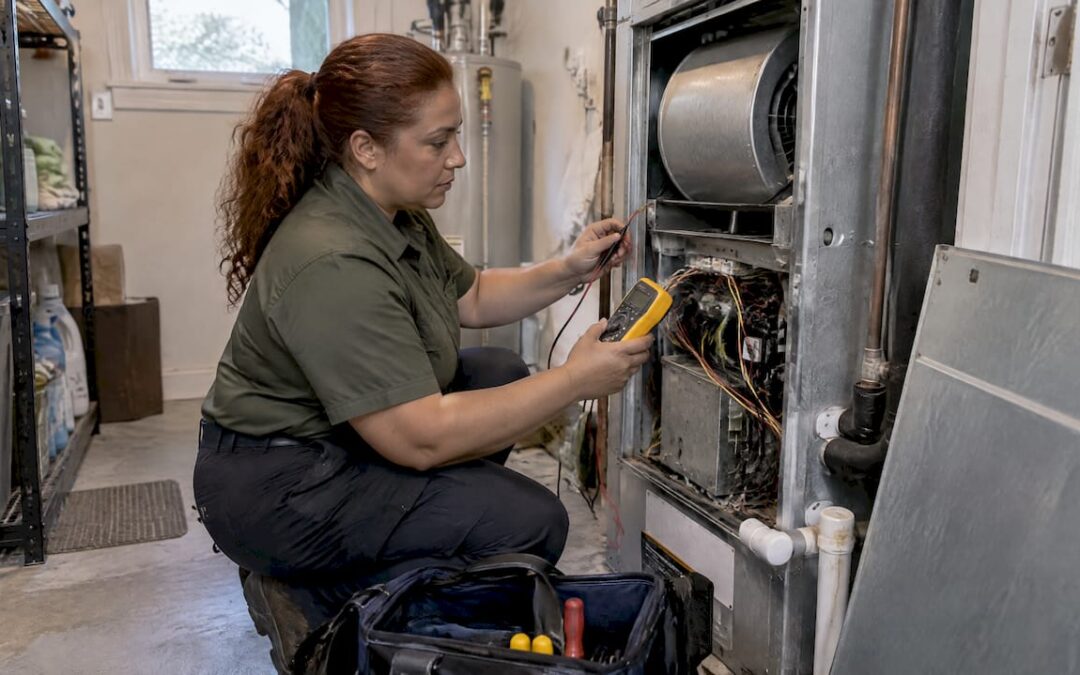
If your heat stops working, the fastest fix is a technician who diagnoses the actual fault before talking about parts. Most Southwest Florida homes heat with a heat pump or an electric air handler, so a “heating problem” often sits in the same equipment that cools your house all summer. We repair those systems across Sarasota and Manatee Counties, and this guide explains what usually goes wrong, what you can safely check yourself, when to stop and call for help, and how to tell an honest repair quote from a pushy one.
TL;DR
- Start with the simple checks: thermostat mode and batteries, the breaker, and a clean air filter. If those do not restore heat, stop and call a technician.
- Never open the cabinet or touch wiring yourself. Electrical parts and fuel-burning equipment are not DIY territory.
- If anyone in the house feels ill while the heat is running, get everyone outside to fresh air and call 911. It could be carbon monoxide.
- A good repair visit includes inspection, a diagnosis you can understand and a written, itemized estimate before any work starts.
- Annual maintenance, scheduled in the fall for heating, is the best way to avoid a cold-night breakdown.
Table of Contents
- Why heating repair works differently in Southwest Florida
- The most common heating problems we see
- What you can safely check before you call
- When no heat becomes an emergency
- Repair or replace: how to decide
- What a good repair visit looks like
- Who should repair your heating system
- Our perspective: fix what is broken, nothing more
- Prevent the next breakdown
- Heating repair with AC Heroes
- FAQ
- Sources
Why heating repair works differently in Southwest Florida
A Sarasota home may need heat on only a few dozen nights a year. That sounds harmless, but it creates a specific problem: the heating side of your system sits unused for months, then gets asked to work on the first cold front, usually at night, when everyone wants it at once.
Parts that have not run since last winter are the ones that fail. Dust has settled on components, a thermostat setting has been left on cooling, a capacitor has weakened after a long summer of hard work. Because the same outdoor unit, air handler, ductwork and thermostat serve both seasons, a summer of humidity and heavy use shows up as a winter fault.
That is why we treat heating repair as a whole-system job. We start with diagnostics, not a sales pitch, because the fault is often smaller than the first guess. If you are searching for a home heating repair service, you want someone who finds the real cause, tells you what it costs in writing and does the work once.
The most common heating problems we see
The causes below are the ones that explain most no-heat and weak-heat calls on a typical residential system. They are listed from the simplest to the most involved.
The thermostat is set wrong or has failed
A thermostat left on cool, set to “auto” with the wrong target, or running on dead batteries is the most common reason a system appears broken. Smart thermostats add another layer: a lost Wi-Fi connection or a schedule override can keep the heat from starting. A failed thermostat, or one that has drifted out of calibration, can also send the wrong signal even when the system itself is healthy.
A dirty air filter chokes airflow
A clogged filter restricts the air your system moves. Heat output drops, rooms warm unevenly and the equipment works harder and can shut itself down on a safety limit. It is the cheapest problem to prevent and one we find constantly. The Department of Energy lists regular monthly filter inspections and replacements as part of preventative care in its Guide to Home Heating and Cooling.
Electrical failures: capacitors, contactors and breakers
A heat pump or air handler relies on electrical parts that wear out. A weak capacitor can stop a fan or compressor from starting. A pitted contactor can fail to close. A breaker that trips repeatedly is a warning, not a nuisance: something is drawing too much current, and resetting it again and again can make the problem worse. Energy Star’s maintenance checklist includes tightening electrical connections and measuring voltage and current on motors for exactly this reason.
Heat pump problems: ice, reversing valve and backup heat
A heat pump heats by moving warmth from outdoor air into the house. When something goes wrong, the symptoms are specific: the outdoor unit is iced over for long periods, the system blows lukewarm air, or the backup electric heat runs constantly and your electric bill climbs. A faulty reversing valve, low refrigerant from a leak, a failing defrost control or a dirty outdoor coil can each cause these signs, and each needs a trained technician with the right gauges and testing tools.
Airflow and duct problems
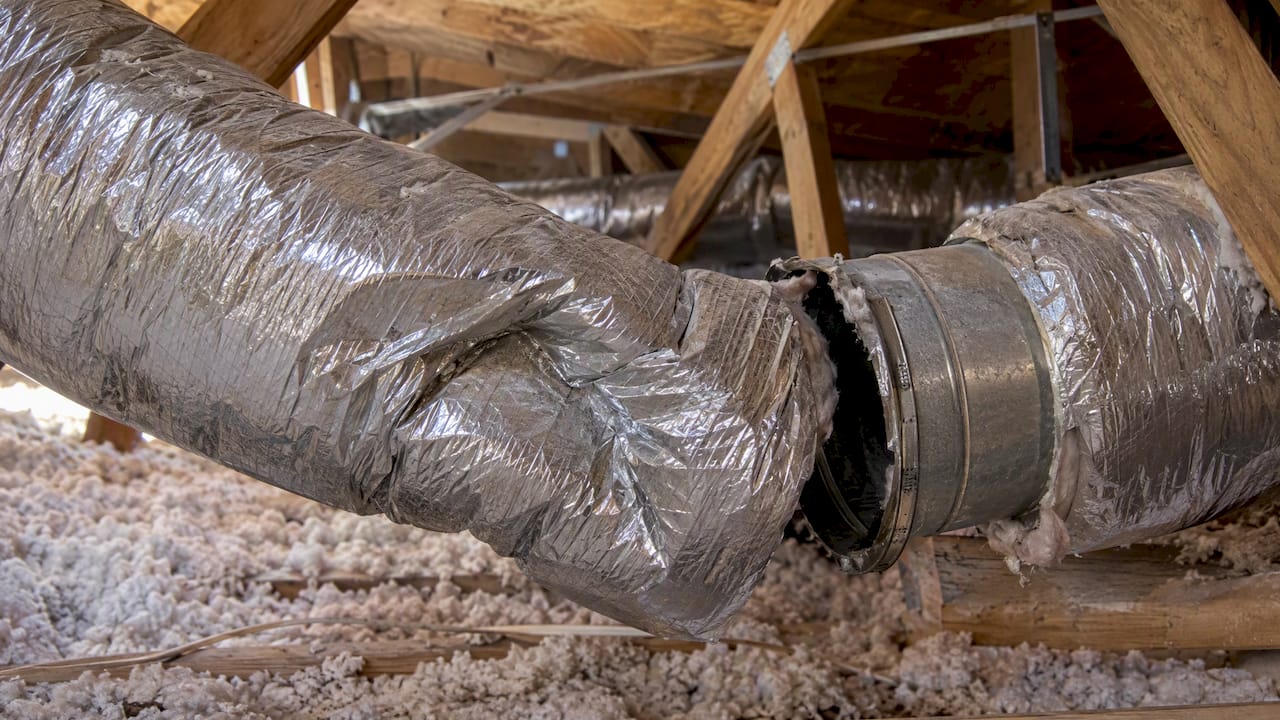
Some “heating failures” are really delivery failures. Leaky, disconnected or crushed ducts lose heated air before it reaches the room, and a blower motor that is running slowly moves too little of it. If one room stays cold while the rest of the house is fine, the ductwork is a prime suspect. We repair and replace ductwork and also offer air duct cleaning when contamination is part of the picture.
Worn blower motors, igniters and control boards
If your home does have a gas furnace, the usual failure points are the igniter, flame sensor, blower motor and control board. A furnace that tries to start, clicks and shuts off often points to one of these. These are fuel-burning components, which is why they belong to a licensed professional.
What you can safely check before you call
These steps take about ten minutes and need no tools. They are worth doing because they sometimes solve the problem, and because what you find helps the technician on the phone.
- Check the thermostat. Confirm it is set to heat, the target temperature is a few degrees above the room temperature, and the display is on. Replace batteries if it uses them.
- Look at the breaker panel. Find the breakers for the air handler and the outdoor unit. If one is tripped, reset it once. If it trips again, leave it off and call.
- Inspect the filter. Slide it out and hold it to the light. If you cannot see through it, replace it with the correct size.
- Check the vents and returns. Make sure furniture, rugs or closed registers are not blocking airflow.
- Look at the outdoor unit without touching it. Note whether the fan is spinning, whether there is ice and whether leaves or debris are packed around it.
- Write down what you notice. Strange sounds, smells, how long the problem has lasted and whether it started suddenly all help diagnosis.
Stop there. Do not remove panels, jump wires, spray anything into the unit or try to relight equipment. If you smell gas, leave the house and call your gas utility or 911 from outside.
When no heat becomes an emergency
Most heating failures are uncomfortable, not dangerous. A few are different.
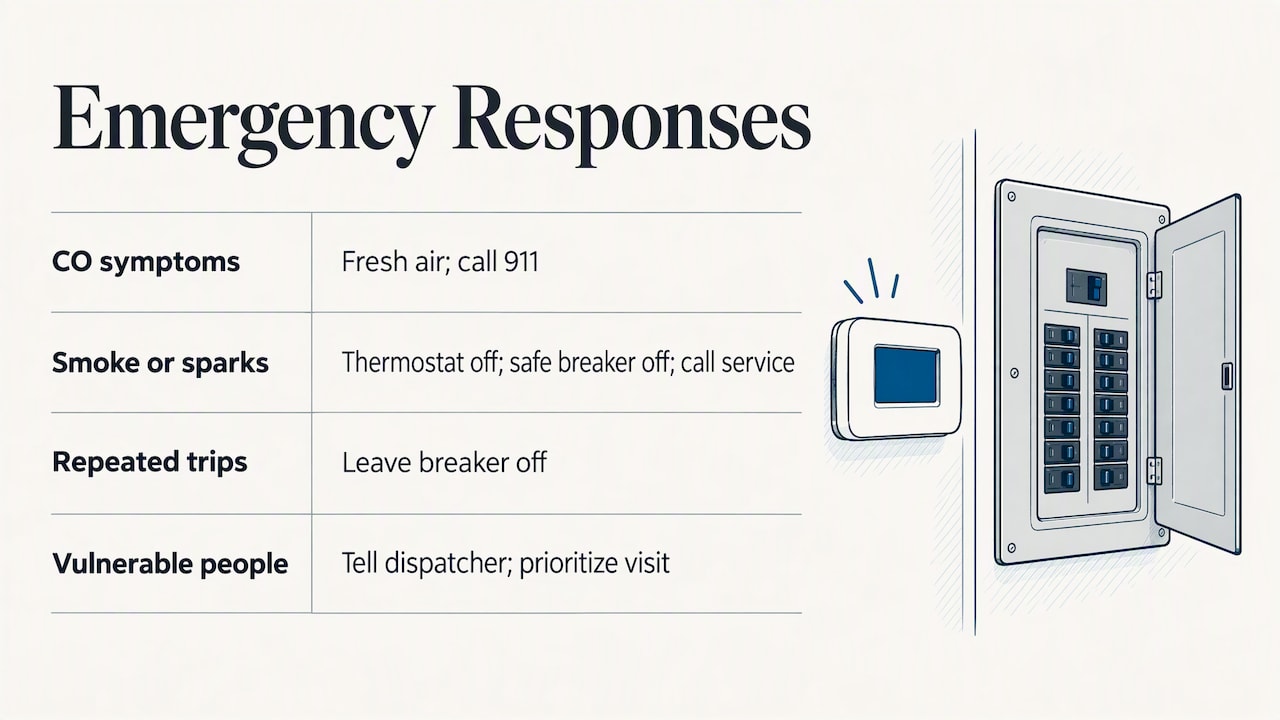
Carbon monoxide symptoms. If anyone feels dizzy, has a headache or nausea, or feels ill while a fuel-burning heater is running, get everyone into fresh air and call 911. Do not wait to finish a troubleshooting list. Make sure your home has working carbon monoxide alarms near sleeping areas.
Burning smell, smoke or sparks. Turn the system off at the thermostat, then at the breaker if it is safe to reach, and call for service. Electric heat strips can overheat when airflow is restricted or wiring is damaged.
Repeated breaker trips. This points to an electrical fault. Leave the breaker off.
Vulnerable people at home. Infants, older adults and anyone with a health condition should not spend a cold night without heat if you can avoid it. Tell the dispatcher so the visit is prioritized.
For urgent situations we offer emergency AC and HVAC repair with 24/7 response across Sarasota and Manatee Counties, including Lakewood Ranch, Venice and Longboat Key.
Repair or replace: how to decide
A repair is the right answer when the fault is a single failed part and the rest of the system is in decent shape. Replacement deserves a serious look when repairs keep recurring, the equipment is old, or efficiency is poor enough to show on your energy bills.
Two efficiency ratings help you compare equipment. According to the Department of Energy, AFUE measures furnace efficiency, while HSPF indicates heat pump efficiency. Ask the technician for the rating on your current system and on any replacement they propose, so you are comparing numbers rather than sales language.
Use these questions to frame the decision:
| Question | Leans toward repair | Leans toward replacement |
|---|---|---|
| What failed? | One part, such as a capacitor, igniter or thermostat | A major component, such as a compressor, or several parts in a short time |
| How often has it failed? | First breakdown in a long while | A repeat visit in the same season |
| How does the system perform? | Heats evenly and bills are steady | Uneven rooms, rising bills, constant backup heat |
| What does the written estimate say? | Repair is a modest part of a new system’s cost | Repair is a large share of a new system’s cost |
We will tell you which way the evidence points. If a repair makes sense, we say so, even though a new system is a bigger job. When replacement is the better value, our AC installation service sizes the system for Florida humidity rather than copying whatever was there before.
What a good repair visit looks like
You should know what to expect before anyone steps on your property. ENERGY STAR’s advice on hiring a heating and cooling contractor is a useful standard: check state licensing and insurance, ask for referrals and references, expect the contractor to inspect your system and home, and get written, itemized estimates.
In practice, a solid visit follows this order:
- Listening. The technician asks what you noticed, when it started and what you already tried.
- Inspection. They test the thermostat, electrical components, airflow, the indoor and outdoor units and the condition of the ductwork.
- Diagnosis in plain language. You hear what failed, why, and what else is worn but not yet failing.
- A written, itemized estimate. Parts and labor are listed separately, and you approve the work before it begins.
- The repair and a test. The system is run to confirm that it heats properly, and the technician explains what was done.
If a company gives you a large number over the phone without seeing the system, or pushes replacement before testing anything, slow down. Our approach is the opposite: thorough diagnostics first, accurate estimates second, and a sales conversation only if the findings call for one.
Who should repair your heating system
Heating equipment combines electricity, refrigerant and sometimes fuel. A homeowner’s job is to do the safe checks above. Everything beyond that goes to a licensed, insured professional. Ask any contractor for their license and proof of insurance, and ask for references from recent local jobs. Confirm that the person quoting your job is the company’s own technician, and ask what warranty applies to labor and parts.
On our jobs, labor is covered by a one-year labor warranty, we handle manufacturer warranty work, and we back the work with a satisfaction guarantee. Military and veteran households can ask about our discounts when booking.
Our perspective: fix what is broken, nothing more
We are veteran-owned and local, and we built AC Heroes around a simple observation: many homeowners in this area expect to be scared into a bigger bill. A technician finds a problem, quotes a dramatic number and lists parts nobody can verify. We think that is the wrong way around.
When your heat fails, you are cold, tired and in a hurry, which is the worst time to evaluate a sales pitch. So we slow the first ten minutes down. We confirm the symptom, test before we guess, show you what we found and put a transparent written estimate in your hands. Sometimes the answer is a thermostat or a filter. Sometimes it is a part. Occasionally it is the system itself, and then we explain why and what the options are.
Our other point of view is that heating repair is mostly a maintenance question in disguise. In Florida the same equipment works through months of heat and humidity, then has to switch jobs for a few cold weeks. A pre-season check in the fall finds the weak capacitor, the loose connection and the clogged coil before they pick a 2 a.m. cold snap to fail. That is cheaper and calmer than an emergency call.
— Scott
Prevent the next breakdown
The Department of Energy says regular maintenance can reduce heating and cooling costs by 5% to 10% and prolong equipment life. Its guidance includes an annual professional pre-season check-up, monthly filter checks and keeping outdoor units free of debris.
Energy Star adds that timing matters: professional check-ups work best in the fall for heating and in the spring for cooling, which also helps you avoid peak service demand. A thorough visit should include testing thermostat settings, tightening electrical connections, measuring voltage and current on motors and lubricating moving parts.
For a Sarasota home, a sensible routine looks like this:
- Every month: check the filter and replace it when it is dirty.
- Every month or two: clear leaves, grass clippings and debris from around the outdoor unit.
- Each fall: schedule a professional check before the first cold front, and test the heat on a mild day so you find problems early.
- Each spring: schedule a cooling check before the long summer run.
If you want a system that is checked twice a year on a schedule, our preventative maintenance programs come in annual and semi-annual options. Our guide on how often to service your AC in Sarasota and Bradenton goes deeper on timing for this climate.
Heating repair with AC Heroes
When the heat is out and you want a straight answer, call us. We serve homeowners throughout Sarasota and Manatee Counties with same-day and emergency repair, thorough diagnostics, written estimates and a one-year labor warranty. Our AC repair page explains how a visit works and how to book. Tell us the symptoms when you call and we will tell you what to expect.
FAQ
Who do you call when your heat stops working?
Call a licensed HVAC contractor, not a general handyman. If you have a gas furnace and smell gas, leave the house first and call your gas utility or 911. In Southwest Florida, your heating is most often part of your AC system, so the same company that services your air conditioner should be able to repair it.
Can I fix my heat pump or furnace myself?
You can check the thermostat, the breaker and the filter, and clear debris from around the outdoor unit. Beyond that, repairs involve live electrical parts, refrigerant and sometimes gas, so they should be left to a licensed professional. A wrong guess can damage the equipment or put your family at risk.
How do I know if my heating system needs repair or replacement?
Look at what failed, how often it fails, how old the system is and what the written estimate says. A single failed part on an otherwise healthy system usually suggests repair. Repeat breakdowns, uneven heating and rising bills suggest asking for replacement options and comparing efficiency ratings such as AFUE for furnaces and HSPF for heat pumps.
What should a heating repair estimate include?
It should be written and itemized, with parts and labor listed separately, and it should come after the technician has inspected your system. ENERGY STAR advises homeowners to expect exactly that from a contractor. You should approve the estimate before any work begins.
When is the best time to schedule heating maintenance?
Early fall, before the first cold weather. Energy Star recommends fall check-ups for heating, and booking ahead of the rush means you get an appointment instead of an emergency call.
Sources
- 10 Tips for Hiring a Heating and Cooling Contractor, ENERGY STAR
- Guide to Home Heating and Cooling, U.S. Department of Energy
- Maintenance Checklist, ENERGY STAR